Price based on lowest available cruise only fare for double occupancy. Subject to change at any time.
Indulge aboard Rotterdam Pinnacle Class sophistication with fine dining, award-winning service, superb accommodations, and captivating entertainment.
Cruise ID: 71153
Crew Appreciation is a daily (adjustable) amount added to your onboard account and pooled in order to recognise the many team members throughout our fleet who contribute to the guest experience.
The daily Crew Appreciation charge is $16.00 per guest per day for non-suite stateroom guests and $17.50 per guest per day for suite guests. The charges are subject to change without notice.
The Crew Appreciation charge is paid to Holland America Line team members and represents an important part of their compensation. An 18% service charge is automatically applied to all beverage purchases, bar retail items, specialty restaurant cover charges, all for-purchase a la carte menu items, and all Spa & Salon services. Local sales taxes are applied where required.
| Date | Time | Price * | Booking |
|---|---|---|---|
| 12 July 2026 | 15:00 | €1,951 | Call us to book |
| 16 August 2026 | 15:00 | €2,071 | Call us to book |
* Price based on lowest available cruise only fare for double occupancy. Subject to change at any time.
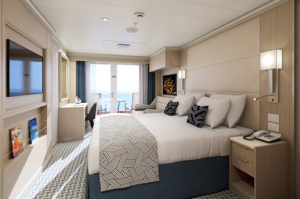
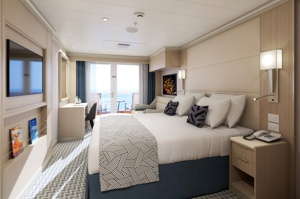
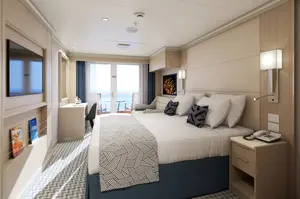
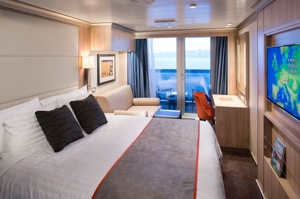
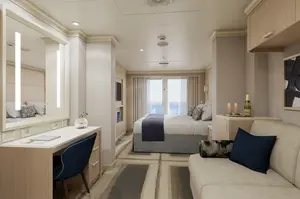
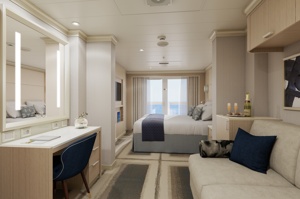
Floor-to-ceiling doors lead to your balcony, infusing these coveted 228–405 sq. ft. staterooms with natural light. Enjoy a private verandah overlooking the ocean, a spacious sitting area for unwinding, and our signature Mariner's Dream™ bed that can convert from one queen to two beds.
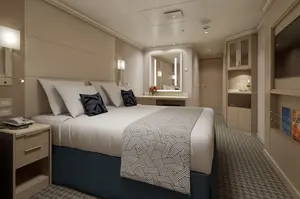
Perfect for guests traveling solo, these staterooms feature one queen-size Signature Mariner's Dream™ bed with plush Euro-top mattress, plus a shower with premium massage head an array of modern amenities.
Approximately 127-172 sq. ft.
Floor-to-ceiling doors lead to your balcony, infusing these coveted 228–405 sq. ft. staterooms with natural light. Enjoy a private verandah overlooking the ocean, a spacious sitting area for unwinding, and our signature Mariner's Dream™ bed that can convert from one queen to two beds.
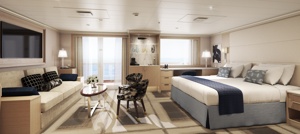
With floor-to-ceiling windows overlooking a private verandah, these spacious suites are flooded with light. They feature a large sitting area and two lower beds convertible to one king-size bed—our signature Mariner's Dream™ bed with plush Euro-Top mattresses. The bathroom comes with a dual-sink vanity, full-size whirlpool bath and shower, plus additional shower stall. Amenities include use of the exclusive Neptune Lounge, a private concierge and an array of complimentary services.
Approximately 465-502 sq. ft. including verandah
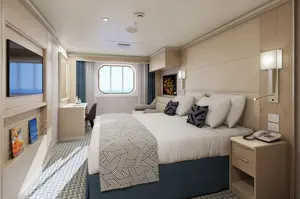
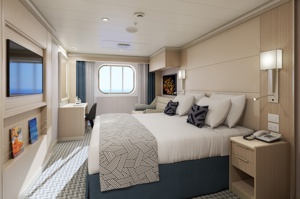
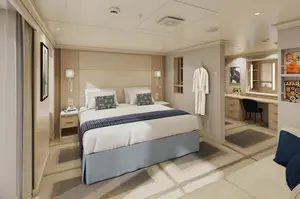
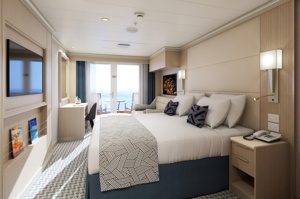
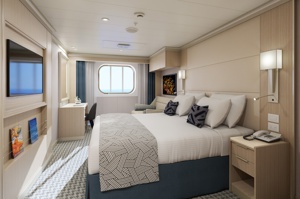
With a view of the ocean through a window or porthole, these expansive staterooms include a sitting area, two beds that convert to one queen-size bed — our signature Mariner's Dream™ bed with plush euro-top mattress — premium massage showerheads, and a host of amenities.
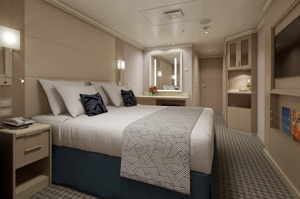
Big on comfort, our 143–225 sq. ft. Inside staterooms offer exceptional value with two beds that convert to one queen-size bed — our signature Mariner's Dream™ bed with plush euro-top mattress — premium massage showerheads and a host of amenities.
Graced with a private verandah, floor-to-ceiling glass doors, and comfortable sitting areas, our 260–356 sq. ft. Vista Suites are filled with natural light. They include two beds that convert to one queen-size bed — our signature Mariner's Dream™ bed with plush euro-top mattress.
Featuring floor-to-ceiling glass doors, spacious private verandahs, expansive sitting areas, and comfortable sleeping accommodations with Mariner's Dream™ beds, our 465–502 sq. ft. suite sleeps up to four guests and boasts a deep soaking tub and an independent, full-size shower stall, dual-sink vanities, premium bathrobes, pillow menus, fresh flowers, and binoculars.
These elegant 393–400 sq. ft. suites feature a sitting area with floor-to-ceiling windows overlooking a private verandah. Signature Suites accommodate up to four guests with two beds that convert to a queen- or king-size bed — our signature Mariner's Dream™ bed, and a Murphy, Pullman, or sofa bed, depending on configuration.
Floor-to-ceiling doors lead to your balcony, infusing these coveted 228–405 sq. ft. staterooms with natural light. Enjoy a private verandah overlooking the ocean, a spacious sitting area for unwinding, and our signature Mariner's Dream™ bed that can convert from one queen to two beds.
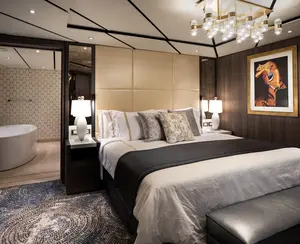
Our premier 1,290 sq. ft. Pinnacle Suite features floor-to-ceiling glass doors, large private Whirlpool verandahs (on select ships), living, dining, and dressing rooms, and lush sleeping accommodations with luxurious Duxiana® king beds. These elegant suites sleep up to four guests and include a deep soaking tub and an independent, full-size shower stall, dual-sink vanities, and guest toilets.
With a view of the ocean through a window or porthole, these expansive staterooms include a sitting area, two beds that convert to one queen-size bed — our signature Mariner's Dream™ bed with plush euro-top mattress — premium massage showerheads, and a host of amenities.
Day 1 Rotterdam, Netherlands
Rotterdam is a city that's a long way removed from most people's stereotypical notion of the Netherlands. There are few, if any, canals to be found here nor are there any quaint windmills. There is, however, a thriving modern city which is one of the busiest ports in the entire world.
Day 2 Cruising
Day 3 Lerwick, Shetland Islands, Scotland
Founded by Dutch fishermen in the 17th century, Lerwick today is a busy town and administrative center. Handsome stone buildings—known as lodberries—line the harbor; they provided loading bays for goods, some of them illegal. The town's twisting flagstone lanes and harbor once heaved with activity, and Lerwick is still an active port today. This is also where most visitors to Shetland dock, spilling out of cruise ships, allowing passengers to walk around the town.
Day 4 Cruising
Day 5 Seydisfjørdur, Iceland
Seyðisfjörður, a beautiful 19th-century Norwegian village on the east coast of Iceland, is regarded by many as one of Iceland's most picturesque towns, not only due to its impressive environment, but also because nowhere in Iceland has a community of old wooden buildings been preserved so well as here. Poet Matthías Johannessen called Seyðisfjörður a 'pearl enclosed in a shell'. The community owes its origins to foreign merchants, mainly Danes, who started trading in the fjord in the mid-19th century. But the crucial factor in the evolution of the village was the establishment of the Icelandic herring fishery by Norwegians in 1870-1900. The Norwegians built up a number of herring-fishing facilities, and in a matter of years the little community grew into a boom town. Today, about 800 people live in Seyðisfjörður. The local economy has long been based on the fisheries, while light industry also flourishes. Tourism is playing a growing role, as the picturesque town in its spectacular surroundings attracts more and more visitors. The car/passenger ferry Norrøna, which plies between continental Europe and Iceland every summer, docks at Seyðisfjörður every Thursday. Seyðisfjörður has been a cosmopolitan community from its foundation, and the ferry service has contributed to ensuring that it remains so.
Day 6 Akureyri, Iceland
Akureyri, called the Capital of the North is the second largest urban area in Iceland, and a lively one at that. Hemmed by the 60-km (37-mile) long Eyjafjörður, Akureyri is sheltered from the ocean winds and embraced by mountains on three sides. Late 19th-century wooden houses impart a sense of history, and the twin spires of a modern Lutheran church rising on a green hill near the waterfront, provide a focal point. To the south of Akureyri is the pyramid-shape rhyolite mountain Súlur. Beyond it is Kerling, the highest peak in Eyjafjörður District.
Day 7 Isafjørdur, Iceland
Two colossal terraces of sheer rock stand either side of this extraordinarily located town - which rides a jutting spit onto an immensity of black fjord water. Surprisingly, considering the remoteness of its location and its compact size, Isafjordur is a modern and lively place to visit, offering a great choice of cafes and delicious restaurants – which are well stocked to impress visitors. The town is a perfectly located base for adventures amongst Iceland's fantastic wilderness - with skiing, hiking and water-sports popular pursuits among visitors.
Day 8 Reykjavík, Iceland
Sprawling Reykjavík, the nation's nerve center and government seat, is home to half the island's population. On a bay overlooked by proud Mt. Esja (pronounced eh-shyuh), with its ever-changing hues, Reykjavík presents a colorful sight, its concrete houses painted in light colors and topped by vibrant red, blue, and green roofs. In contrast to the almost treeless countryside, Reykjavík has many tall, native birches, rowans, and willows, as well as imported aspen, pines, and spruces.Reykjavík's name comes from the Icelandic words for smoke, reykur, and bay, vík. In AD 874, Norseman Ingólfur Arnarson saw Iceland rising out of the misty sea and came ashore at a bay eerily shrouded with plumes of steam from nearby hot springs. Today most of the houses in Reykjavík are heated by near-boiling water from the hot springs. Natural heating avoids air pollution; there's no smoke around. You may notice, however, that the hot water brings a slight sulfur smell to the bathroom.Prices are easily on a par with other major European cities. A practical option is to purchase a Reykjavík City Card at the Tourist Information Center or at the Reykjavík Youth Hostel. This card permits unlimited bus usage and admission to any of the city's seven pools, the Family Park and Zoo, and city museums. The cards are valid for one (ISK 3,300), two (ISK 4,400), or three days (ISK 4,900), and they pay for themselves after three or four uses a day. Even lacking the City Card, paying admission (ISK 500, or ISK 250 for seniors and people with disabilities) to one of the city art museums (Hafnarhús, Kjarvalsstaðir, or Ásmundarsafn) gets you free same-day admission to the other two.
Day 1 Rotterdam, Netherlands
Rotterdam is a city that's a long way removed from most people's stereotypical notion of the Netherlands. There are few, if any, canals to be found here nor are there any quaint windmills. There is, however, a thriving modern city which is one of the busiest ports in the entire world.
Days 2-3 Cruising
Day 4 Seydisfjørdur, Iceland
Seyðisfjörður, a beautiful 19th-century Norwegian village on the east coast of Iceland, is regarded by many as one of Iceland's most picturesque towns, not only due to its impressive environment, but also because nowhere in Iceland has a community of old wooden buildings been preserved so well as here. Poet Matthías Johannessen called Seyðisfjörður a 'pearl enclosed in a shell'. The community owes its origins to foreign merchants, mainly Danes, who started trading in the fjord in the mid-19th century. But the crucial factor in the evolution of the village was the establishment of the Icelandic herring fishery by Norwegians in 1870-1900. The Norwegians built up a number of herring-fishing facilities, and in a matter of years the little community grew into a boom town. Today, about 800 people live in Seyðisfjörður. The local economy has long been based on the fisheries, while light industry also flourishes. Tourism is playing a growing role, as the picturesque town in its spectacular surroundings attracts more and more visitors. The car/passenger ferry Norrøna, which plies between continental Europe and Iceland every summer, docks at Seyðisfjörður every Thursday. Seyðisfjörður has been a cosmopolitan community from its foundation, and the ferry service has contributed to ensuring that it remains so.
Day 5 Akureyri, Iceland
Akureyri, called the Capital of the North is the second largest urban area in Iceland, and a lively one at that. Hemmed by the 60-km (37-mile) long Eyjafjörður, Akureyri is sheltered from the ocean winds and embraced by mountains on three sides. Late 19th-century wooden houses impart a sense of history, and the twin spires of a modern Lutheran church rising on a green hill near the waterfront, provide a focal point. To the south of Akureyri is the pyramid-shape rhyolite mountain Súlur. Beyond it is Kerling, the highest peak in Eyjafjörður District.
Day 6 Isafjørdur, Iceland
Two colossal terraces of sheer rock stand either side of this extraordinarily located town - which rides a jutting spit onto an immensity of black fjord water. Surprisingly, considering the remoteness of its location and its compact size, Isafjordur is a modern and lively place to visit, offering a great choice of cafes and delicious restaurants – which are well stocked to impress visitors. The town is a perfectly located base for adventures amongst Iceland's fantastic wilderness - with skiing, hiking and water-sports popular pursuits among visitors.
Day 7 Grundarfjørdur, Iceland
Day 8 Reykjavík, Iceland
Sprawling Reykjavík, the nation's nerve center and government seat, is home to half the island's population. On a bay overlooked by proud Mt. Esja (pronounced eh-shyuh), with its ever-changing hues, Reykjavík presents a colorful sight, its concrete houses painted in light colors and topped by vibrant red, blue, and green roofs. In contrast to the almost treeless countryside, Reykjavík has many tall, native birches, rowans, and willows, as well as imported aspen, pines, and spruces.Reykjavík's name comes from the Icelandic words for smoke, reykur, and bay, vík. In AD 874, Norseman Ingólfur Arnarson saw Iceland rising out of the misty sea and came ashore at a bay eerily shrouded with plumes of steam from nearby hot springs. Today most of the houses in Reykjavík are heated by near-boiling water from the hot springs. Natural heating avoids air pollution; there's no smoke around. You may notice, however, that the hot water brings a slight sulfur smell to the bathroom.Prices are easily on a par with other major European cities. A practical option is to purchase a Reykjavík City Card at the Tourist Information Center or at the Reykjavík Youth Hostel. This card permits unlimited bus usage and admission to any of the city's seven pools, the Family Park and Zoo, and city museums. The cards are valid for one (ISK 3,300), two (ISK 4,400), or three days (ISK 4,900), and they pay for themselves after three or four uses a day. Even lacking the City Card, paying admission (ISK 500, or ISK 250 for seniors and people with disabilities) to one of the city art museums (Hafnarhús, Kjarvalsstaðir, or Ásmundarsafn) gets you free same-day admission to the other two.

The Department of Foreign Affairs has up-to-date advice for Irish citizens on staying safe and healthy abroad. For more security, local laws, health, passport and visa information see https://www.ireland.ie/en/dfa/overseas-travel/ and follow dfatravelwise