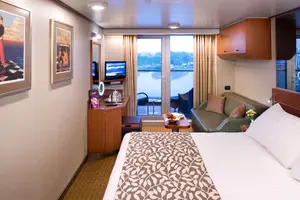
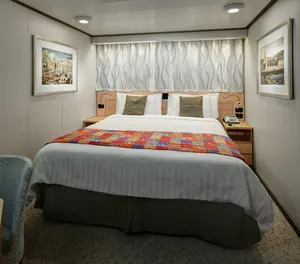
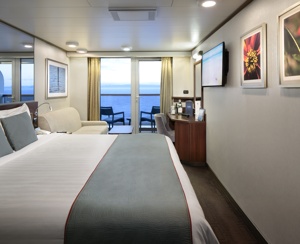
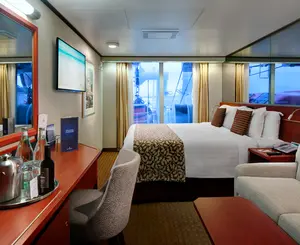
Day 1 Fort Lauderdale, Florida, United States
Like many southeast Florida neighbors, Fort Lauderdale has long been revitalizing. In a state where gaudy tourist zones often stand aloof from workaday downtowns, Fort Lauderdale exhibits consistency at both ends of the 2-mile Las Olas corridor. The sparkling look results from upgrades both downtown and on the beachfront. Matching the downtown's innovative arts district, cafés, and boutiques is an equally inventive beach area, with hotels, cafés, and shops facing an undeveloped shoreline, and new resort-style hotels replacing faded icons of yesteryear. Despite wariness of pretentious overdevelopment, city leaders have allowed a striking number of glittering high-rises. Nostalgic locals and frequent visitors fret over the diminishing vision of sailboats bobbing in waters near downtown; however, Fort Lauderdale remains the yachting capital of the world, and the water toys don't seem to be going anywhere.
Day 4 Cartagena, Colombia
Cartagena's magnificent city walls and fortresses, now a UNESCO World Heritage Site, enclose a well-restored historic center (the Cuidad Amurallada, or walled city) with plazas, churches, museums, and shops that have made it a lively coastal vacation spot for South Americans and others. New hotels and restaurants make the walled city a desirable place to stay, and the formerly down-at-the-heels Getsemaní neighborhood attracts those seeking a bohemian buzz. The historic center is a small section of Cartagena; many hotels are in the Bocagrande district, an elongated peninsula where high-rise hotels overlook a long, gray-sand beach.When it was founded in 1533 by Spanish conquistador Pedro de Heredia, Cartagena was the only port on the South American mainland. Gold and silver looted from indigenous peoples passed through here en route to Spain and attracted pirates, including Sir Francis Drake, who in 1586 torched 200 buildings. Cartagena's walls protected the city's riches as well as the New World's most important African slave market.
Day 7 Puntarenas, Costa Rica
This town is not on the Nicoya Peninsula, but rather on Costa Rica's mainland. It is best known as a cruise-ship port and launching pad for ferries heading southeast to the coast of the Nicoya Peninsula and for cruises sailing out on the Gulf of Nicoya. Puntarenas is also a major fishing port with a lively fish market. The town's reputation suffers from the unimpressive parts you see from your car as you roll through town on the way to the ferry dock. But the town has a lot of character off the main drag, thanks to its illustrious past as an affluent port town and principal vacation spot for San José's wealthy, who arrived by train in the last century. Once the port was moved and roads opened to other beaches, Puntarenas's economy crashed, but it's making a comeback. Sitting on a narrow spit of sand—punta de arenas literally means "point of sand"—that protrudes into the Gulf of Nicoya, the town boasts a beautifully groomed, wide Blue Flag beach with views of the Nicoya Peninsula and spectacular sunsets, along with a public swimming pool, the San Lucas Beach Club, and a marine-life museum. Ticos arrive by bus and car to enjoy the beach and stroll the Paseo de los Turistas, a beachfront promenade lined with tree-shaded concrete benches and seafood restaurants. Crowds of locals, called porteños, cruise by on bicycles, the town's most popular form of transport.
Day 9 Acajutla, El Salvador
Day 10 Puerto Quetzal, Guatemala
Puerto Quetzal is Guatemala's largest Pacific Ocean port. It is important for both cargo traffic and as a stop-off point for cruise liners
Day 12 Acapulco, Mexico
Acapulco is a major seaport on the scenic Pacific coast of Mexico, located on a deep semi-circular bay with sandy beaches and blue waters. It was a popular destination for many movie stars during the Golden Age of Hollywood, including Elvis Presley and Elizabeth Taylor.
Day 14 Puerto Vallarta, Mexico
Puerto Vallarta is a resort town on Mexico's Pacific coast, in Jalisco state. It is known for its beaches, water sports and nightlife scene. Its cobblestone center is home to the ornate Nuestra Señora de Guadalupe church, boutique shops and a range of restaurants and bars. El Malecón is a beachside promenade with contemporary sculptures, as well as bars, lounges and nightclubs.
Day 15 Cabo San Lucas, Mexico
Cabo San Lucas, a resort city on the southern tip of Mexico's Baja California peninsula, is known for its beaches, water-based activities and nightlife. Playa El Médano is Cabo's main beach, with outdoor restaurants and numerous bars. Past the marina is Land's End promontory, site of Playa del Amor (Lover's Beach) and El Arco, a natural archway in the seacliffs.
Day 17 San Diego, California, United States
San Diego is a vacationer's paradise, with year-round temperatures in the seventies and near-constant sunshine. One of America's most family-friendly cities, San Diego is home to LEGOLAND, the New Children's Museum, and the famous San Diego Zoo. Sunbathers and surfers are guaranteed to find their perfect beach, and foodies find delights in artisanal breweries, local bistros, and gourmet restaurants. From the Broadway excitement of La Jolla Playhouse to the European feel of Little Italy to the nouveau-chic of the Gaslamp Quarter, San Diego has something for everyone.
Day 18 Santa Barbara, California, United States
Day 21 Astoria, Oregon, United States
Day 22 Victoria, British Columbia, Canada
Victoria, the capital of a province whose license plates brazenly label it "The Best Place on Earth," is a walkable, livable seaside city of fragrant gardens, waterfront paths, engaging museums, and beautifully restored 19th-century architecture. In summer, the Inner Harbour—Victoria's social and cultural center—buzzes with visiting yachts, horse-and-carriage rides, street entertainers, and excursion boats heading out to visit pods of friendly local whales. Yes, it might be a bit touristy, but Victoria's good looks, gracious pace, and manageable size are instantly beguiling, especially if you stand back to admire the mountains and ocean beyond. At the southern tip of Vancouver Island, Victoria dips slightly below the 49th parallel. That puts it farther south than most of Canada, giving it the mildest climate in the country, with virtually no snow and less than half the rain of Vancouver. The city's geography, or at least its place names, can cause confusion. Just to clarify: the city of Victoria is on Vancouver Island (not Victoria Island). The city of Vancouver is on the British Columbia mainland, not on Vancouver Island. At any rate, that upstart city of Vancouver didn't even exist in 1843 when Victoria, then called Fort Victoria, was founded as the westernmost trading post of the British-owned Hudson's Bay Company. Victoria was the first European settlement on Vancouver Island, and in 1868 it became the capital of British Columbia. The British weren't here alone, of course. The local First Nations people—the Songhees, the Saanich, and the Sooke—had already lived in the areas for thousands of years before anyone else arrived. Their art and culture are visible throughout southern Vancouver Island. You can see this in private and public galleries, in the totems at Thunderbird Park, in the striking collections at the Royal British Columbia Museum, and at the Quw'utsun'Cultural and Conference Centre in nearby Duncan. Spanish explorers were the first foreigners to explore the area, although they left little more than place names (Galiano Island and Cordova Bay, for example). The thousands of Chinese immigrants drawn by the gold rushes of the late 19th century had a much greater impact, founding Canada's oldest Chinatown and adding an Asian influence that's still quite pronounced in Victoria's multicultural mix. Despite its role as the provincial capital, Victoria was largely eclipsed, economically, by Vancouver throughout the 20th century. This, as it turns out, was all to the good, helping to preserve Victoria's historic downtown and keeping the city largely free of skyscrapers and highways. For much of the 20th century, Victoria was marketed to tourists as "The Most British City in Canada," and it still has more than its share of Anglo-themed pubs, tea shops, and double-decker buses. These days, however, Victorians prefer to celebrate their combined indigenous, Asian, and European heritage, and the city's stunning wilderness backdrop. Locals do often venture out for afternoon tea, but they're just as likely to nosh on dim sum or tapas. Decades-old shops sell imported linens and tweeds, but newer upstarts offer local designs in hemp and organic cotton. And let's not forget that fabric prevalent among locals: Gore-Tex. The outdoors is ever present here. You can hike, bike, kayak, sail, or whale-watch straight from the city center, and forests, beaches, offshore islands, and wilderness parklands lie just minutes away. A little farther afield, there's surfing near Sooke, wine touring in the Cowichan Valley, and kayaking among the Gulf Islands.
Day 23 Vancouver, British Columbia, Canada
Vancouver is a delicious juxtaposition of urban sophistication and on-your-doorstep wilderness adventure. The mountains and seascape make the city an outdoor playground for hiking, skiing, kayaking, cycling, and sailing—and so much more—while the cuisine and arts scenes are equally diverse, reflecting the makeup of Vancouver's ethnic (predominantly Asian) mosaic. Vancouver is consistently ranked as one of the world's most livable cities, and it's easy for visitors to see why. It's beautiful, it's outdoorsy, and there's a laidback West Coast vibe. On the one hand, there's easy access to a variety of outdoor activities, a fabulous variety of beaches, and amazing parks. At the same time, the city has a multicultural vitality and cosmopolitan flair. The attraction is as much in the range of food choices—the fresh seafood and local produce are some of North America's best—as it is in the museums, shopping, and nightlife.Vancouver's landscaping also adds to the city's walking appeal. In spring, flowerbeds spill over with tulips and daffodils while sea breezes scatter scented cherry blossoms throughout Downtown; in summer office workers take to the beaches, parks, and urban courtyards for picnic lunches and laptop meetings. More than 8 million visitors each year come to Vancouver, Canada's third-largest metropolitan area. Because of its peninsula location, traffic flow is a contentious issue. Thankfully, Vancouver is wonderfully walkable, especially in the downtown core. The North Shore is a scoot across the harbor, and the rapid-transit system to Richmond and the airport means that staying in the more affordable 'burbs doesn't have to be synonymous with sacrificing convenience. The mild climate, exquisite natural scenery, and relaxed outdoor lifestyle keep attracting residents, and the number of visitors is increasing for the same reasons. People often get their first glimpse of Vancouver when catching an Alaskan cruise, and many return at some point to spend more time here.


 01 2311868
 1-2
1-2