Price based on lowest available cruise only fare for double occupancy. Subject to change at any time.
The launch of Azamara Pursuit in 2018 opened the seas to new itineraries, and the opportunity to provide our guests with more unique and immersive experiences than ever before.
Your boutique hotel at sea, the Azamara Pursuit® is a mid-sized ship with a deck plan that's intimate but never crowded, and offers everything modern voyagers are looking for—plus some unexpected extras.
Seven restaurants, cafes, and lounges, a refreshing pool, sun-drenched decks, a revitalising spa…the list goes on. With so many areas to explore onboard Azamara Pursuit, it's a good thing we have deck plans.
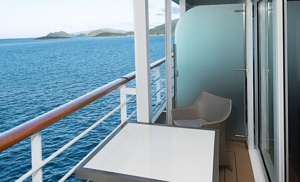
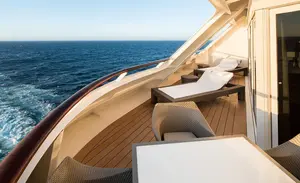
One of the best ways to experience the jaw-dropping sights of the Fjords of Norway, and the mesmerising Mediterranean Sea coast lines is from your private veranda. It's just one of the many benefits exclusive to your wonderfully spacious suite aboard Azamara Pursuit.
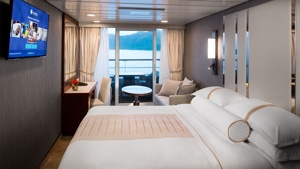
Escape to a private retreat of polished style, featuring contemporary décor, luxurious linens, plush cotton robes and slippers, French bath products, fresh flowers, turndown treats, and 24-hour room service. (Perhaps we should arrange for a wake-up call?)
Cruise ID: 62578
Your Home at Sea
Across the fleet, you will find we go beyond the expectations of even the most well-traveled cruisers, with our top-tier crew, premier service and world class amenities. Our ships, Azamara Journey®, Azamara Quest®, Azamara Pursuit®, and Azamara Onward℠, are perfectly sized to cross oceans, sail into intimate rivers, cruise along scenic waterways, and dock at locations bigger ships can't reach.
Tips & Gratuities are always included
| Date | Time | Price * | Booking |
|---|---|---|---|
| 21 January 2028 | 18:00 | €3,577 | Call us to book |
* Price based on lowest available cruise only fare for double occupancy. Subject to change at any time.
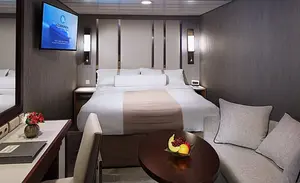
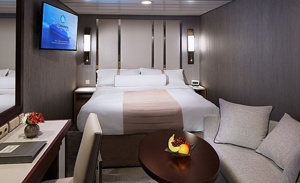
With the polished style and stellar service of a Club Interior Stateroom, you'll enjoy our plush cotton robes, slippers upon request, French bath products, and 24-hour room service.
Explore the world in comfort and luxury in this stylish, elegant stateroom featuring all the amenities of a boutique hotel at sea. Relax with plush cotton robes, 24-hour room service, and more.
Stateroom Features
Included Stateroom Amenities
Introducing a new way to see the world with Azamara@. With our Club Veranda Plus Staterooms, enjoy spectacular ocean and destination views, plus a host of guest-favorite amenities—all at a great value. Everything you love about our Club Veranda Staterooms is included, plus extra perks and amenities to elevate your time on board.
With our Club Veranda Plus Staterooms, enjoy spectacular ocean and destination views, plus a host of guest-favourite amenities-all at a great value. Everything you love about our Club Veranda Staterooms is included, plus extra perks and amenities to elevate your time on board
Stateroom Features
Included Stateroom Amenities
With the polished style and stellar service of a Club Interior Stateroom, you'll enjoy our plush cotton robes, slippers upon request, French bath products, and 24-hour room service.
Explore the world in comfort and luxury in this stylish, elegant stateroom featuring all the amenities of a boutique hotel at sea. Relax with plush cotton robes, 24-hour room service, and more.
Stateroom Features
Included Stateroom Amenities
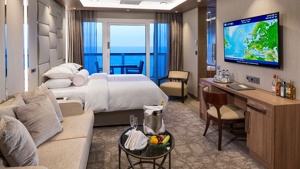
Located next to the tranquil Sanctum Spa. our newest suites are the ultimate in contemporary design, comfort and pampering. With easy access to the Spa open decks, swimming pool and our great restaurants, the Club Spa Suites surround you with organic, elegant décor, and the finest, most soothing amenities. Suites feature comfortable sitting area, daily delivery of healthy snacks, Frette plush robes, and in-room spa music. For the ultimate in serene surroundings, the spacious glass-enclosed spa soaking tub and separate rain shower bring the outside in, with views to the endless seas beyond.
Suite Features
Included Suite Amenities (For cruises sailing before April 1, 2026)
Included Suite Amenities (For cruises on or after April 1, 2026)
Spacious and comfortable, our Club Continent Suites feature fresh new décor inspired by natural elements. With two beds convertible to a queen, a cozy sitting area, breezy balcony and refreshed bathroom with a bathtub or shower, this is your wonderful, refined home away from home.
Suite Features
Included Suite Amenities (For cruises sailing before April 1, 2026)
Included Suite Amenities (For cruises on or after April 1, 2026)
Spacious and comfortable, our Club Continent Suites feature fresh new décor inspired by natural elements. With two beds convertible to a queen, a cozy sitting area, breezy balcony and refreshed bathroom with a bathtub or shower, this is your wonderful, refined home away from home.
Suite Features
Included Suite Amenities
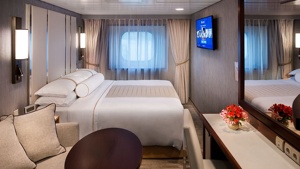
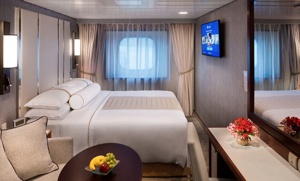
A vacation home with an ocean view, our Club Oceanview Staterooms offer all the style and amenities of a boutique hotel. Relax with plush cotton robes, slippers upon request, French bath products, and 24-hour room service.
Revel in the polished style and stellar service of your own private retreat, boasting a modern and contemporary décor. Enjoy picturesque ocean views outside your window, and all the finer touches included in every stateroom.
Stateroom Features
Included Stateroom Amenities
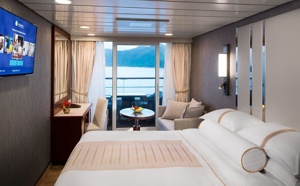
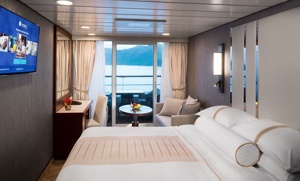
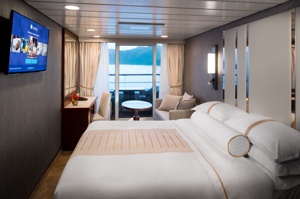
Refreshing sea breezes and stunning destination views come standard in our staterooms that offer your own private veranda. Greet the day with room service on your balcony, or toast to another stunning sunset. Polished touches and professional service perfectly compliment the warm, friendly attention you'll receive from our staff and crew.
Enjoy ocean views a sea breezes on your private veranda. Stateroom price based on deck and location of the ship.
Refreshing sea breezes and stunning destination views come standard in our staterooms that offer your own private veranda. Greet the day with room service on your balcony, or toast to another stunning sunset.
Stateroom Features
Included Stateroom Amenities
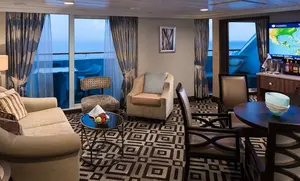
Our largest suites have been transformed with contemporary design elements that are both elegant and organic, with design that draws inspiration from nature- a sandy cliff, flowing river beds, exquisite white sand beaches, and rustling grasses. Enjoy a spacious living room, separate bedroom and all the amenities that come with our most luxurious suite.
Suite Features
Included Suite Amenities (For cruises sailing before April 1, 2026)
Included Suite Amenities (For cruises on or after April 1, 2026)
With a large living room and a separate bedroom —plus your own private veranda —your suite offers a restful retreat after your immersive experiences on land. Enjoy elegant, contemporary d6cor, and rich marble touches. You'll be spoiled by the attention to detail in these beautiful suites, and of course, all the pampering too.
Suite Features
Included Suite Amenities (For cruises sailing before April 1, 2026)
Included Suite Amenities (For cruises on or after April 1, 2026)
A vacation home with an ocean view, our Club Oceanview Staterooms offer all the style and amenities of a boutique hotel. Relax with plush cotton robes, slippers upon request, French bath products, and 24-hour room service.
Revel in the polished style and stellar service of your own private retreat, boasting a modern and contemporary décor. Enjoy picturesque ocean views outside your window, and all the finer touches included in every stateroom.
Stateroom Features
Included Stateroom Amenities
Refreshing sea breezes and stunning destination views come standard in our staterooms that offer your own private veranda. Greet the day with room service on your balcony, or toast to another stunning sunset. Polished touches and professional service perfectly compliment the warm, friendly attention you'll receive from our staff and crew.
Enjoy ocean views and sea breezes on your private veranda. Stateroom price based on deck and location of the ship.
Refreshing sea breezes and stunning destination views come standard in our staterooms that offer your own private veranda. Greet the day with room service on your balcony, or toast to another stunning sunset.
Stateroom Features
Included Stateroom Amenities
Introducing a new way to see the world with Azamara@. With our Club Veranda Plus Staterooms, enjoy spectacular ocean and destination views, plus a host of guest-favorite amenities—all at a great value. Everything you love about our Club Veranda Staterooms is included, plus extra perks and amenities to elevate your time on board.
With our Club Veranda Plus Staterooms, enjoy spectacular ocean and destination views, plus a host of guest-favourite amenities-all at a great value. Everything you love about our Club Veranda Staterooms is included, plus extra perks and amenities to elevate your time on board
Stateroom Features
Included Stateroom Amenities
Day 1 Auckland, New Zealand
Auckland is called the City of Sails, and visitors flying in will see why. On the East Coast is the Waitemata Harbour—a Maori word meaning sparkling waters—which is bordered by the Hauraki Gulf, an aquatic playground peppered with small islands where many Aucklanders can be found "mucking around in boats."Not surprisingly, Auckland has some 70,000 boats. About one in four households in Auckland has a seacraft of some kind, and there are 102 beaches within an hour's drive; during the week many are quite empty. Even the airport is by the water; it borders the Manukau Harbour, which also takes its name from the Maori language and means solitary bird.According to Maori tradition, the Auckland isthmus was originally peopled by a race of giants and fairy folk. When Europeans arrived in the early 19th century, however, the Ngati-Whatua tribe was firmly in control of the region. The British began negotiations with the Ngati-Whatua in 1840 to purchase the isthmus and establish the colony's first capital. In September of that year the British flag was hoisted to mark the township's foundation, and Auckland remained the capital until 1865, when the seat of government was moved to Wellington. Aucklanders expected to suffer from the shift; it hurt their pride but not their pockets. As the terminal for the South Sea shipping routes, Auckland was already an established commercial center. Since then the urban sprawl has made this city of approximately 1.3 million people one of the world's largest geographically.A couple of days in the city will reveal just how developed and sophisticated Auckland is—the Mercer City Survey 2012 saw it ranked as the third-highest city for quality of life—though those seeking a New York in the South Pacific will be disappointed. Auckland is more get-up and go-outside than get-dressed-up and go-out. That said, most shops are open daily, central bars and a few nightclubs buzz well into the wee hours, especially Thursday through Saturday, and a mix of Maori, Pacific people, Asians, and Europeans contributes to the cultural milieu. Auckland has the world's largest single population of Pacific Islanders living outside their home countries, though many of them live outside the central parts of the city and in Manukau to the south. The Samoan language is the second most spoken in New Zealand. Most Pacific people came to New Zealand seeking a better life. When the plentiful, low-skilled work that attracted them dried up, the dream soured, and the population has suffered with poor health and education. Luckily, policies are now addressing that, and change is slowly coming. The Pacifica Festival in March is the region's biggest cultural event, attracting thousands to Western Springs. The annual Pacific Island Secondary Schools' Competition, also in March, sees young Pacific Islander and Asian students compete in traditional dance, drumming, and singing. This event is open to the public.At the geographical center of Auckland city is the 1,082-foot Sky Tower, a convenient landmark for those exploring on foot and some say a visible sign of the city's naked aspiration. It has earned nicknames like the Needle and the Big Penis—a counterpoint to a poem by acclaimed New Zealand poet James K. Baxter, which refers to Rangitoto Island as a clitoris in the harbor.The Waitemata Harbour has become better known since New Zealand staged its first defense of the America's Cup in 2000 and the successful Louis Vuitton Pacific Series in early 2009. The first regatta saw major redevelopment of the waterfront. The area, where many of the city's most popular bars, cafés, and restaurants are located, is now known as Viaduct Basin or, more commonly, the Viaduct. A recent expansion has created another area, Wynyard Quarter, which is slowly adding restaurants.These days, Auckland is still considered too bold and brash for its own good by many Kiwis who live "south of the Bombay Hills," the geographical divide between Auckland and the rest of New Zealand (barring Northland). "Jafa," an acronym for "just another f—ing Aucklander," has entered the local lexicon; there's even a book out called Way of the Jafa: A Guide to Surviving Auckland and Aucklanders. A common complaint is that Auckland absorbs the wealth from the hard work of the rest of the country. Most Aucklanders, on the other hand, still try to shrug and see it as the parochial envy of those who live in small towns. But these internal identity squabbles aren't your problem. You can enjoy a well-made coffee in almost any café, or take a walk on a beach—knowing that within 30 minutes' driving time you could be cruising the spectacular harbor, playing a round at a public golf course, or even walking in subtropical forest while listening to the song of a native tûî bird.
Day 2 Russel, Bay of Islands, New Zealand
Day 3 Cruising
Day 4 Norfolk Island, Norfolk Island
Day 5 Cruising
Day 6 New Plymouth, New Zealand
Day 7 Nelson, New Zealand
Day 8 Picton, New Zealand
The maritime township of Picton (population 4,000) lies at the head of Queen Charlotte Sound and is the arrival point for ferries from the North Island, as well as a growing number of international cruise ships. It plays a major role in providing services and transport by water taxi to a multitude of remote communities in the vast area of islands, peninsulas, and waterways that make up the Marlborough Sounds Maritime Park. There's plenty to do in town, with crafts markets in summer, historical sights to see, and walking tracks to scenic lookouts over the sounds. The main foreshore is lined by London Quay, which looks up Queen Charlotte Sound to the bays beyond. High Street runs down to London Quay from the hills, and between them these two streets make up the center of town.
Day 9 Akaroa, New Zealand
Day 10 Dunedin, New Zealand
Clinging to the walls of the natural amphitheater at the west end of Otago Harbour, the South Island's second-largest city is enriched with inspiring nearby seascapes and wildlife. Because Dunedin is a university town, floods of students give the city a vitality far greater than its population of 122,000 might suggest. Its manageable size makes it easy to explore on foot—with the possible exception of Baldwin Street, the world's steepest residential street and home to the annual "gutbuster" race, in which people run up it, and the "Jaffa" race, in which people roll the namesake spherical chocolate candy down it.Dunedin, the Gaelic name for Edinburgh, was founded in 1848 by settlers of the Free Church of Scotland, a breakaway group from the Presbyterian Church. The city's Scottish roots are still visible; you'll find New Zealand's first and only (legal) whisky distillery, a statue of Scottish poet Robert Burns, and more kilts, sporrans, and gillies than you can shake a stick at! The Scottish settlers and local Maori came together in relative peace, but this wasn't true of the European whalers who were here three decades before, as places with names such as Murdering Beach illustrate.Dunedin has always had a reputation for the eccentric. Wearing no shoes and a big beard here marks a man as bohemian rather than destitute, and the residents wouldn't have it any other way. The University of Otago was the country's first university and has been drawing writers ever since its founding in 1871, most notably Janet Frame and the poet James K. Baxter. Dunedin also has a musical heritage, which blossomed into the "Dunedin Sound" of the 1970s and '80s.
Day 11 Dunedin, New Zealand
Clinging to the walls of the natural amphitheater at the west end of Otago Harbour, the South Island's second-largest city is enriched with inspiring nearby seascapes and wildlife. Because Dunedin is a university town, floods of students give the city a vitality far greater than its population of 122,000 might suggest. Its manageable size makes it easy to explore on foot—with the possible exception of Baldwin Street, the world's steepest residential street and home to the annual "gutbuster" race, in which people run up it, and the "Jaffa" race, in which people roll the namesake spherical chocolate candy down it.Dunedin, the Gaelic name for Edinburgh, was founded in 1848 by settlers of the Free Church of Scotland, a breakaway group from the Presbyterian Church. The city's Scottish roots are still visible; you'll find New Zealand's first and only (legal) whisky distillery, a statue of Scottish poet Robert Burns, and more kilts, sporrans, and gillies than you can shake a stick at! The Scottish settlers and local Maori came together in relative peace, but this wasn't true of the European whalers who were here three decades before, as places with names such as Murdering Beach illustrate.Dunedin has always had a reputation for the eccentric. Wearing no shoes and a big beard here marks a man as bohemian rather than destitute, and the residents wouldn't have it any other way. The University of Otago was the country's first university and has been drawing writers ever since its founding in 1871, most notably Janet Frame and the poet James K. Baxter. Dunedin also has a musical heritage, which blossomed into the "Dunedin Sound" of the 1970s and '80s.
Day 12 Kaikoura, New Zealand
Day 13 Napier, New Zealand
The earthquake that struck Napier at 10:46 am on February 3, 1931, was—at 7.8 on the Richter scale—the largest quake ever recorded in New Zealand. The coastline was wrenched upward several feet. Almost all the town's brick buildings collapsed; many people were killed on the footpaths as they rushed outside. The quake triggered fires throughout town, and with water mains shattered, little could be done to stop the blazes that devoured the remaining wooden structures. Only a few buildings survived (the Public Service Building with its neoclassical pillars is one), and the death toll was well over 100.The surviving townspeople set up tents and cookhouses in Nelson Park, and then tackled the city's reconstruction at a remarkable pace. In the rush to rebuild, Napier went mad for art deco, the bold, geometric style that had burst on the global design scene in 1925. Now a walk through the art deco district, concentrated between Emerson, Herschell, Dalton, and Browning streets, is a stylistic immersion. The decorative elements are often above the ground floors, so keep your eyes up.
Day 14 Cruising
Day 15 Auckland, New Zealand
Auckland is called the City of Sails, and visitors flying in will see why. On the East Coast is the Waitemata Harbour—a Maori word meaning sparkling waters—which is bordered by the Hauraki Gulf, an aquatic playground peppered with small islands where many Aucklanders can be found "mucking around in boats."Not surprisingly, Auckland has some 70,000 boats. About one in four households in Auckland has a seacraft of some kind, and there are 102 beaches within an hour's drive; during the week many are quite empty. Even the airport is by the water; it borders the Manukau Harbour, which also takes its name from the Maori language and means solitary bird.According to Maori tradition, the Auckland isthmus was originally peopled by a race of giants and fairy folk. When Europeans arrived in the early 19th century, however, the Ngati-Whatua tribe was firmly in control of the region. The British began negotiations with the Ngati-Whatua in 1840 to purchase the isthmus and establish the colony's first capital. In September of that year the British flag was hoisted to mark the township's foundation, and Auckland remained the capital until 1865, when the seat of government was moved to Wellington. Aucklanders expected to suffer from the shift; it hurt their pride but not their pockets. As the terminal for the South Sea shipping routes, Auckland was already an established commercial center. Since then the urban sprawl has made this city of approximately 1.3 million people one of the world's largest geographically.A couple of days in the city will reveal just how developed and sophisticated Auckland is—the Mercer City Survey 2012 saw it ranked as the third-highest city for quality of life—though those seeking a New York in the South Pacific will be disappointed. Auckland is more get-up and go-outside than get-dressed-up and go-out. That said, most shops are open daily, central bars and a few nightclubs buzz well into the wee hours, especially Thursday through Saturday, and a mix of Maori, Pacific people, Asians, and Europeans contributes to the cultural milieu. Auckland has the world's largest single population of Pacific Islanders living outside their home countries, though many of them live outside the central parts of the city and in Manukau to the south. The Samoan language is the second most spoken in New Zealand. Most Pacific people came to New Zealand seeking a better life. When the plentiful, low-skilled work that attracted them dried up, the dream soured, and the population has suffered with poor health and education. Luckily, policies are now addressing that, and change is slowly coming. The Pacifica Festival in March is the region's biggest cultural event, attracting thousands to Western Springs. The annual Pacific Island Secondary Schools' Competition, also in March, sees young Pacific Islander and Asian students compete in traditional dance, drumming, and singing. This event is open to the public.At the geographical center of Auckland city is the 1,082-foot Sky Tower, a convenient landmark for those exploring on foot and some say a visible sign of the city's naked aspiration. It has earned nicknames like the Needle and the Big Penis—a counterpoint to a poem by acclaimed New Zealand poet James K. Baxter, which refers to Rangitoto Island as a clitoris in the harbor.The Waitemata Harbour has become better known since New Zealand staged its first defense of the America's Cup in 2000 and the successful Louis Vuitton Pacific Series in early 2009. The first regatta saw major redevelopment of the waterfront. The area, where many of the city's most popular bars, cafés, and restaurants are located, is now known as Viaduct Basin or, more commonly, the Viaduct. A recent expansion has created another area, Wynyard Quarter, which is slowly adding restaurants.These days, Auckland is still considered too bold and brash for its own good by many Kiwis who live "south of the Bombay Hills," the geographical divide between Auckland and the rest of New Zealand (barring Northland). "Jafa," an acronym for "just another f—ing Aucklander," has entered the local lexicon; there's even a book out called Way of the Jafa: A Guide to Surviving Auckland and Aucklanders. A common complaint is that Auckland absorbs the wealth from the hard work of the rest of the country. Most Aucklanders, on the other hand, still try to shrug and see it as the parochial envy of those who live in small towns. But these internal identity squabbles aren't your problem. You can enjoy a well-made coffee in almost any café, or take a walk on a beach—knowing that within 30 minutes' driving time you could be cruising the spectacular harbor, playing a round at a public golf course, or even walking in subtropical forest while listening to the song of a native tûî bird.
The Department of Foreign Affairs has up-to-date advice for Irish citizens on staying safe and healthy abroad. For more security, local laws, health, passport and visa information see https://www.ireland.ie/en/dfa/overseas-travel/ and follow dfatravelwise