Price based on lowest available cruise only fare for double occupancy. Subject to change at any time.
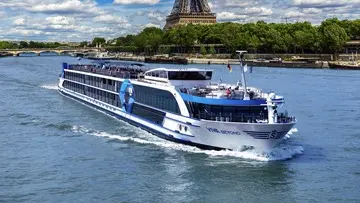
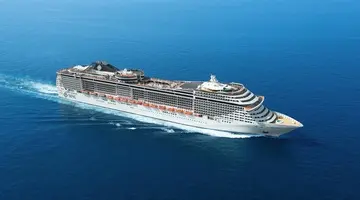
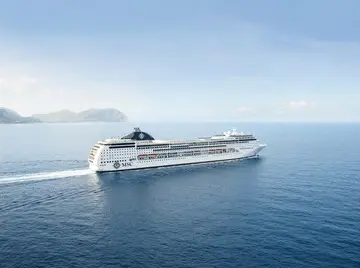
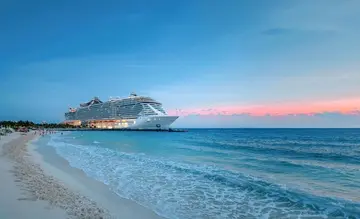
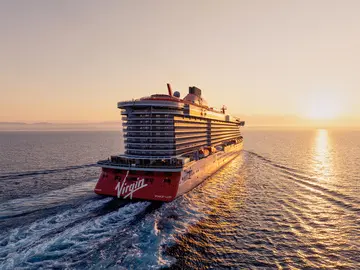
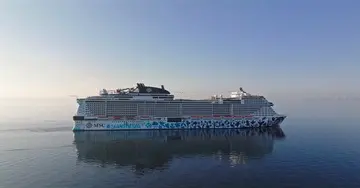
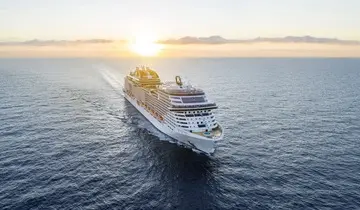
After a year of adversity and adaptation, it's only fitting that we name our third ship, "Resilient Lady". While the proverbial seas may have been rough, we've never been more excited to set sail from our new homeport of Piraeus (Athens), Greece - seeing the world with fresh and appreciative eyes.
Cruise ID: 55344
Shake for Champagne™ whenever you feel like raising a glass, and enjoy effortless sips of bubbly with our on-demand bottle service. Just open up the Virgin Voyages App and give your phone a shake to see a secret button appear. Tap it, and a bottle of Möet Chandon Impérial® will be delivered to you, so you can drink in the moment with a great sparkly wine no matter where you are on board.
We've taken care of tipping.
We've reimagined the way people holiday at sea from the hull up — so that epic service becomes the norm. Our Crew is knowledgeable, friendly, and incredibly stylish — but mainly, our Crew is genuinely happy to help you make your vacation one of a kind. So get pampered, taste everything, and enjoy a drink (or two) knowing that all tips are covered. Cheers to that.
| Date | Time | Price * | Booking |
|---|---|---|---|
| 23 May 2027 | 17:00 | €1,425 | Call us to book |
| 04 July 2027 | 17:00 | €1,425 | Call us to book |
| 12 September 2027 | 17:00 | €1,425 | Call us to book |
| 26 September 2027 | 17:00 | €1,342 | Call us to book |
| 10 October 2027 | 17:00 | €1,341 | Call us to book |
| 17 October 2027 | 17:00 | €1,342 | Call us to book |
* Price based on lowest available cruise only fare for double occupancy. Subject to change at any time.
Friend groups, solo Sailors, and duos alike can get in on the Insider action. Roomy Rainshowers and mood lighting punctuate our cozy escapes — giving you the space to recover today and prepare for tomorrow.
For solo Sailors looking for quiet moments with the sea from our super large single beds, or duos perched on our nautically-inspired window seats — the ocean is yours to make eyes with. Gazing out at the waves every morning, this is the closest you can get to the ocean (without the windblown hair).
A lavish suite located (cheekily) at the corner aft of the ship
RockStar Quarters
When you're a rockstar — there's no such thing as being "too much" and there's no part of the ship that isn't yours to explore. Our suites are Tom Dixon-designed and equipped with full size, fully stocked bars — so you can sip by the sea whether you're in the terrace hammock or at the champagne table under the stars.
Wrapping panoramic views from the corner of the ship are emphasized by our design choices - from our custom interior wicker chairs to the beautiful, hand-woven hammocks on the terrace, our pieces were designed with thoughtful space to maximize sea views from any angle.
The #NoBadViews suite ... even the bathroom has an ocean view
RockStar Suite
When you're a rockstar — there's no such thing as being "too much" and there's no part of the ship that isn't yours to explore. Our suites are Tom Dixon-designed and equipped with full size, fully stocked bars — so you can sip by the sea whether you're in the terrace hammock or at the champagne table under the stars.
With endless views from the back of the ship whether you're relaxing at the terrace champagne table, or gazing at the waves directly from your indoor Peek-a-Boo shower window, there's no such thing as a bad view in this suite.
The highest, and biggest, balcony of all the Sweet Aft Suites
RockStar Suite
When you're a rockstar — there's no such thing as being "too much" and there's no part of the ship that isn't yours to explore. Our suites are Tom Dixon-designed and equipped with full size, fully stocked bars — so you can sip by the sea whether you're in the terrace hammock or at the champagne table under the stars.
With endless views from the back of the ship whether you're relaxing at the terrace champagne table, or gazing at the waves directly from your indoor Peek-a-Boo shower window, there's no such thing as a bad view in this suite.
Watch the waves break from a (slightly) bigger balcony
RockStar Quarters
When you're a rockstar — there's no such thing as being "too much" and there's no part of the ship that isn't yours to explore. Our suites are Tom Dixon-designed and equipped with full size, fully stocked bars — so you can sip by the sea whether you're in the terrace hammock or at the champagne table under the stars.
Wrapping panoramic views from the corner of the ship are emphasized by our design choices - from our custom interior wicker chairs to the beautiful, hand-woven hammocks on the terrace, our pieces were designed with thoughtful space to maximize sea views from any angle.
Best rate for Insider cabins
Friend groups, solo Sailors, and duos alike can get in on the Insider action. Roomy Rainshowers and mood lighting punctuate our cozy escapes — giving you the space to recover today and prepare for tomorrow.
The highest, and the biggest, balcony of all the corner suites
RockStar Quarters
When you're a rockstar — there's no such thing as being "too much" and there's no part of the ship that isn't yours to explore. Our suites are Tom Dixon-designed and equipped with full size, fully stocked bars — so you can sip by the sea whether you're in the terrace hammock or at the champagne table under the stars.
Wrapping panoramic views from the corner of the ship are emphasized by our design choices - from our custom interior wicker chairs to the beautiful, hand-woven hammocks on the terrace, our pieces were designed with thoughtful space to maximize sea views from any angle.
RockStar Suite
When you're a rockstar — there's no such thing as being "too much" and there's no part of the ship that isn't yours to explore. Our suites are Tom Dixon-designed and equipped with full size, fully stocked bars — so you can sip by the sea whether you're in the terrace hammock or at the champagne table under the stars.
Full stocked, full-size bar. Peek-a-Boo shower. Record player ready to spin your favorite tunes. This suite is ideal if you're serious about luxury.
Watch the waves break from an even bigger balcony
RockStar Suite
With endless back-of-the-ship, ocean eye candy, there's no such thing as a bad view in this suite. Sailors.
can kick back here (the highest and biggest terrace of the Sweet Afts) while lounging in the hand-woven hammock chair or relaxing around the Champagne table.
After freshening up and soaking in the sunlight provided by the indoor Peek-a-Boo shower the fully stocked, in-room bar and record player are the only things needed to get the party started. Sleeps up to two.
For solo Sailors looking for quiet moments with the sea from our super large single beds, or duos perched on our nautically-inspired window seats — the ocean is yours to make eyes with. Gazing out at the waves every morning, this is the closest you can get to the ocean (without the windblown hair).
Mid-ship; Most popular
Whether you're getting ready inside at the glam area, rinsing off in your Roomy Rainshower or relaxing outside on your hand-woven terrace hammock (that almost all of our Sea Terraces offer), our spaces are designed to give you sweeping views of the horizon as our mood lighting intuitively matches the light from the oncoming sunset.
Forward or Aft location
Whether you're getting ready inside at the glam area, rinsing off in your Roomy Rainshower or relaxing outside on your hand-woven terrace hammock (that almost all of our Sea Terraces offer), our spaces are designed to give you sweeping views of the horizon as our mood lighting intuitively matches the light from the oncoming sunset.
Cozy space for couples
Friend groups, solo Sailors, and duos alike can get in on the Insider action. Roomy Rainshowers and mood lighting punctuate our cozy escapes — giving you the space to recover today and prepare for tomorrow.
Whether you're getting ready inside at the glam area, rinsing off in your Roomy Rainshower or relaxing outside on your hand-woven terrace hammock (that almost all of our Sea Terraces offer), our spaces are designed to give you sweeping views of the horizon as our mood lighting intuitively matches the light from the oncoming sunset.
Close to lower deck activities/spaces
Whether you're getting ready inside at the glam area, rinsing off in your Roomy Rainshower or relaxing outside on your hand-woven terrace hammock (that almost all of our Sea Terraces offer), our spaces are designed to give you sweeping views of the horizon as our mood lighting intuitively matches the light from the oncoming sunset.
Relaxing is truly an art form in this suite. The terrace hammock here is the perfect spot to enjoy a nightcap while watching the moon flirt with the sea.
Once inside, Sailors can lose themselves in the massive European king bed while drifting off to the sounds of the waves (or the vinyl record player).
Complemented perfectly by brass nautical finishings throughout, there's also a fully stocked, in-room bar, an indoor Peek-a-Boo shower with an iridescent dichroic glass window for a peek into the room and an outdoor Peek-a-View shower facing the sea, near the terrace Champagne table.
and sun lounger. Sleeps up to four.
That horizon won't gaze at itself
Whether you're getting ready inside at the glam area, rinsing off in your Roomy Rainshower or relaxing outside on your hand-woven terrace hammock (that almost all of our Sea Terraces offer), our spaces are designed to give you sweeping views of the horizon as our mood lighting intuitively matches the light from the oncoming sunset.
Terrace sofa & entertainment credenza
Mega RockStar Quarters
How you and your celeb friends already live (lucky you)... but better. These suites are the most exclusive, top-tier luxury living on board — granting you prime access, 24/7 agent attention, a bottomless in-room bar, complimentary parking at PortMiami's Terminal V, and more. Our Tom Dixon-designed suites boast large marbled bathrooms with Peek-a-Boo showers, hand-woven terrace hammocks, and outdoor Peek-a-View showers for when rinsing off requires a little help from the moonlight.
An outdoor champagne table is the perfect spot to admire the view from your suite. With a glamorously designed layout enhanced by our high-tech mood lighting, Hollywood-style vanity glam area, a tricked out terrace, and floor-to-ceiling marble bathroom, this one's perfect for the posh traveler.
Mega RockStar Quarters
How you and your celeb friends already live (lucky you)... but better. These suites are the most exclusive, top-tier luxury living on board — granting you prime access, 24/7 agent attention, a bottomless in-room bar, complimentary parking at PortMiami's Terminal V, and more. Our Tom Dixon-designed suites boast large marbled bathrooms with Peek-a-Boo showers, hand-woven terrace hammocks, and outdoor Peek-a-View showers for when rinsing off requires a little help from the moonlight.
The terrace swing chair is the perfect spot to enjoy a nightcap while you watch the moon flirt with the waves. Once inside, after rinsing off in your outdoor Peek-a-View shower, you can lose yourself in the massive European king bed while drifting off to sleep to the sounds of the waves (or your vinyl record player).
Chaise lounge & entertainment space
Mega RockStar Quarters
How you and your celeb friends already live (lucky you)... but better. These suites are the most exclusive, top-tier luxury living on board — granting you prime access, 24/7 agent attention, a bottomless in-room bar, complimentary parking at PortMiami's Terminal V, and more. Our Tom Dixon-designed suites boast large marbled bathrooms with Peek-a-Boo showers, hand-woven terrace hammocks, and outdoor Peek-a-View showers for when rinsing off requires a little help from the moonlight.
Whether you're into sunshine yoga on the terrace, or serving up negronis at the bar inside, this suite is for those who love to host. When it's just you, you'll be tasked with the age-old problem of whether to relax in the fully-marbled Peek-a-Boo shower inside or rinse off on the Peek-a-View shower outside under the moonlight.
Highest deck location with deck chairs
RockStar Quarters
When you're a rockstar — there's no such thing as being "too much" and there's no part of the ship that isn't yours to explore. Our suites are Tom Dixon-designed and equipped with full size, fully stocked bars — so you can sip by the sea whether you're in the terrace hammock or at the champagne table under the stars.
The Hollywood-style lights. The glam brass vanity area. The full size, fully-stocked bar (complete with mixology equipment, obviously) - this suite begs for you to indulge the rockstar deep within. And with a cheeky view of the European king bed from the (fully) marbled Peek-a-Boo shower, the only sensual rival is the ocean itself.
Outdoor lounge, runway table & hot tub
Mega RockStar Quarters
How you and your celeb friends already live (lucky you)... but better. These suites are the most exclusive, top-tier luxury living on board — granting you prime access, 24/7 agent attention, a bottomless in-room bar, complimentary parking at PortMiami's Terminal V, and more. Our Tom Dixon-designed suites boast large marbled bathrooms with Peek-a-Boo showers, hand-woven terrace hammocks, and outdoor Peek-a-View showers for when rinsing off requires a little help from the moonlight.
This is it. This is the suite. Positioned at the most forward part of the ship - the views are, to put it simply, unrivaled. Get lost watching the waves from your outdoor hot tub or creating a new sound in your personal music room. But don't worry, you can find yourself again the next morning as you meditate alongside the waves on your sprawling, private terrace.
Specially designed to give you epic views of the horizon—whether you're getting ready at the glam area, rinsing off in your Roomy Rainshower, or outside on your hand-woven terrace hammock that some of them offer.
Day 1 Barcelona, Spain
The infinite variety of street life, the nooks and crannies of the medieval Barri Gòtic, the ceramic tile and stained glass of Art Nouveau facades, the art and music, the throb of street life, the food (ah, the food!)—one way or another, Barcelona will find a way to get your full attention. The capital of Catalonia is a banquet for the senses, with its beguiling mix of ancient and modern architecture, tempting cafés and markets, and sun-drenched Mediterranean beaches. A stroll along La Rambla and through waterfront Barceloneta, as well as a tour of Gaudí's majestic Sagrada Famíliaand his other unique creations, are part of a visit to Spain's second-largest city. Modern art museums and chic shops call for attention, too. Barcelona's vibe stays lively well into the night, when you can linger over regional wine and cuisine at buzzing tapas bars.
Day 2 Nice, France
United with France only since 1860, Nice has its own history and atmosphere, which dates back 230,000 years. It was on Colline du Château (now château-less) and at the Plage des Ponchettes, in front of the Old Town, that the Greeks established a market-port in 350 BC and named it Nikaia, which would become Marseilles' chief coastal rival. The Romans established themselves a little later on the hills of Cimiez (Cemenelum), already previously occupied by Ligurians and Celts, and quickly overshadowed the waterfront port. After falling to the Saracen invasions, Nice regained power as an independent state, becoming an important port in the early Middle Ages.So cocksure did it become that in 1388, Nice, along with the hill towns behind, effectively seceded from the county of Provence, under Louis d'Anjou, and allied itself with Savoie. Thus began its liaison with the House of Savoy, and through it with Piedmont and Sardinia, it was the Comté de Nice (Nice County). This relationship lasted some 500 years, tinting the culture, architecture, and dialect in rich Italian hues.By the 19th century Nice was flourishing commercially, locked in rivalry with the neighboring shipping port of Genoa. Another source of income: the dawning of tourism, as first the English, then the Russian nobility, discovered its extraordinary climate and superb waterfront position. A parade of fine stone mansions and hotels closed into a nearly solid wall of masonry, separated from the smooth-round rocks of the beach by what was originally named Camin deis Anglés (the English Way), which of course is now the famous Promenade des Anglais. This magnificent crescent, which is seeking UNESCO recognition, is one of the noblest in France. Many of Nice's most delightful attractions—the Cours Saleya market, the Old Town streets, the Hotel Negresco, and the Palais Masséna—are on or close to this 10-km (6-mile) waterfront, making it the first stop for most visitors, while the redevelopment of Nice's port, around the other side of the Colline du Château, makes it easier for amblers who want to take in the Genoese architecture or peruse the antiques at the Puces de Nice, now part of the Promenade des 100 Antiquaires, along Quai Papacino. Nice also has the distinction of the "Family Plus" label, with free strollers, play areas, and restaurants with child-friendly activities.
Day 3 Rome, Italy
Rome, Italy, the Eternal City, is a stunning blend of ancient history and vibrant modern life. Iconic landmarks like the Colosseum, Vatican City, and the Pantheon showcase its glorious past. Cobblestone streets lead to charming piazzas, bustling markets, and world-renowned museums. Rome's culinary scene delights with traditional Italian cuisine and lively cafes. The city's rich culture, impressive architecture, and warm, welcoming atmosphere make it an unforgettable destination for travellers.
Day 4 Amalfi, Italy
At first glance, it's hard to imagine that this resort destination was one of the world's great naval powers, and a sturdy rival of Genoa and Pisa for control of the Mediterranean in the 11th and 12th centuries. Once the seat of the Amalfi Maritime Republic, the town is set in a verdant valley of the Lattari Mountains, with cream-colored and pastel-hued buildings tightly packing a gorge on the Bay of Salerno. The harbor, which once launched the greatest fleet in Italy, now bobs with ferries and blue-and-white fishing boats. The main street, lined with shops and pasticcerie, has replaced a raging mountain torrent, and terraced hills flaunt the green and gold of lemon groves. Bearing testimony to its great trade with Tunis, Tripoli, and Algiers, Amalfi remains honeycombed with Arab-Sicilian cloisters and covered passages. In a way Amalfi has become great again, showing off its medieval glory days with sea pageants, convents-turned-hotels, ancient paper mills, covered streets, and its glimmering cathedral.
Day 5 Catania, Italy
Catania is an ancient port city on Sicily's east coast. It sits at the foot of Mt. Etna, an active volcano with trails leading up to the summit. The city's wide central square, Piazza del Duomo, features the whimsical Fontana dell'Elefante statue and richly decorated Catania Cathedral. In the southwest corner of the square, La Pescheria weekday fish market is a rowdy spectacle surrounded by seafood restaurants.
Day 6 Cruising
Day 7 Palma de Mallorca, Spain
If you look north of the cathedral (La Seu, or the seat of the bishopric, to Mallorcans) on a map of the city of Palma, you can see around the Plaça Santa Eulàlia a jumble of tiny streets that made up the earliest settlement. Farther out, a ring of wide boulevards traces the fortifications built by the Moors to defend the larger city that emerged by the 12th century. The zigzags mark the bastions that jutted out at regular intervals. By the end of the 19th century, most of the walls had been demolished; the only place where you can still see the massive defenses is at Ses Voltes, along the seafront west of the cathedral.A torrent (streambed) used to run through the middle of the old city, dry for most of the year but often a raging flood in the rainy season. In the 17th century it was diverted to the east, along the moat that ran outside the city walls. Two of Palma's main arteries, La Rambla and the Passeig d'es Born, now follow the stream's natural course. The traditional evening paseo (promenade) takes place on the Born.If you come to Palma by car, park in the garage beneath the Parc de la Mar (the ramp is just off the highway from the airport, as you reach the cathedral) and stroll along the park. Beside it run the huge bastions guarding the Almudaina Palace; the cathedral, golden and massive, rises beyond. Where you exit the garage, there's a ceramic mural by the late Catalan artist and Mallorca resident Joan Miró, facing the cathedral across the pool that runs the length of the park.If you begin early enough, a walk along the ramparts at Ses Voltes from the mirador beside the cathedral is spectacular. The first rays of the sun turn the upper pinnacles of La Seu bright gold and then begin to work their way down the sandstone walls. From the Parc de la Mar, follow Avinguda Antoni Maura past the steps to the palace. Just below the Plaça de la Reina, where the Passeig d'es Born begins, turn left on Carrer de la Boteria into the Plaça de la Llotja (if the Llotja itself is open, don't miss a chance to visit—it's the Mediterranean's finest Gothic-style civic building). From there stroll through the Plaça Drassana to the Museu d'Es Baluard, at the end of Carrer Sant Pere. Retrace your steps to Avinguda Antoni Maura. Walk up the Passeig d'es Born to Plaça Joan Carles I, then right on Avenida de La Unió.
Day 8 Barcelona, Spain
The infinite variety of street life, the nooks and crannies of the medieval Barri Gòtic, the ceramic tile and stained glass of Art Nouveau facades, the art and music, the throb of street life, the food (ah, the food!)—one way or another, Barcelona will find a way to get your full attention. The capital of Catalonia is a banquet for the senses, with its beguiling mix of ancient and modern architecture, tempting cafés and markets, and sun-drenched Mediterranean beaches. A stroll along La Rambla and through waterfront Barceloneta, as well as a tour of Gaudí's majestic Sagrada Famíliaand his other unique creations, are part of a visit to Spain's second-largest city. Modern art museums and chic shops call for attention, too. Barcelona's vibe stays lively well into the night, when you can linger over regional wine and cuisine at buzzing tapas bars.
Day 1 Barcelona, Spain
The infinite variety of street life, the nooks and crannies of the medieval Barri Gòtic, the ceramic tile and stained glass of Art Nouveau facades, the art and music, the throb of street life, the food (ah, the food!)—one way or another, Barcelona will find a way to get your full attention. The capital of Catalonia is a banquet for the senses, with its beguiling mix of ancient and modern architecture, tempting cafés and markets, and sun-drenched Mediterranean beaches. A stroll along La Rambla and through waterfront Barceloneta, as well as a tour of Gaudí's majestic Sagrada Famíliaand his other unique creations, are part of a visit to Spain's second-largest city. Modern art museums and chic shops call for attention, too. Barcelona's vibe stays lively well into the night, when you can linger over regional wine and cuisine at buzzing tapas bars.
Day 2 Cruising
Day 3 La Spezia, Italy
La Spezia is sometimes thought of as nothing but a large, industrialized naval port en route to the Cinque Terre and Portovenere, but it does possess some charm, and it gives you a look at a less tourist-focused part of the Riviera. Its palm-lined promenade, fertile citrus parks, renovated Liberty-style palazzos, and colorful balcony-lined streets make parts of La Spezia surprisingly beautiful. Monday through Saturday mornings, you can stroll through the fresh fish, produce, and local-cheese stalls at the outdoor market on Piazza Cavour, and on Friday take part in the busy flea market on Via Garibaldi. There's also Porto Mirabello, a newly built tourist port with a pool club, shops, and several restaurants that overlook the fleet of super-yachts.
Day 4 Rome, Italy
Rome, Italy, the Eternal City, is a stunning blend of ancient history and vibrant modern life. Iconic landmarks like the Colosseum, Vatican City, and the Pantheon showcase its glorious past. Cobblestone streets lead to charming piazzas, bustling markets, and world-renowned museums. Rome's culinary scene delights with traditional Italian cuisine and lively cafes. The city's rich culture, impressive architecture, and warm, welcoming atmosphere make it an unforgettable destination for travellers.
Day 5 Ajaccio, Corsica, France
Considered Corsica's primary commercial and cultural hub, the largest city and regional capital of Ajaccio is situated on the west coast of the island, approximately 644 km (400 miles) southeast of Marseille, France. Founded in 1492, vestiges of ancient Corsica in this ville impériale revolve around the city's most famous son, Napoléon Bonaparte, whose family home—now the national museum Maison Bonaparte—pays tribute to the emperor's historical influence.Remnants from what was originally a 12th-century Genoese colony are still visible around the Old Town near the imposing citadel and watchtower. Perfect for exploring, the luminous seaside city surrounded by snowcapped mountains and pretty beaches offers numerous sites, eateries, side streets, and a popular harbor, where sailboats and fishing vessels moor in the picturesque Tino Rossi port lined with well-established restaurants and cafés serving fresh local fare.
Day 6 Marseille, France
Since being designated a European Capital of Culture for 2013, with an estimated €660 million of funding in the bargain, Marseille has been in the throes of an extraordinary transformation, with no fewer than five major new arts centers, a beautifully refurbished port, revitalized neighborhoods, and a slew of new shops and restaurants. Once the underdog, this time-burnished city is now welcoming an influx of weekend tourists who have colonized entire neighborhoods and transformed them into elegant pieds-à-terre (or should we say, mer). The second-largest city in France, Marseille is one of Europe's most vibrant destinations. Feisty and fond of broad gestures, it is also as complicated and as cosmopolitan now as it was when a band of Phoenician Greeks first sailed into the harbor that is today's Vieux Port in 600 BC. Legend has it that on that same day a local chieftain's daughter, Gyptis, needed to choose a husband, and her wandering eyes settled on the Greeks' handsome commander Protis. Her dowry brought land near the mouth of the Rhône, where the Greeks founded Massalia, the most important Continental shipping port in antiquity. The port flourished for some 500 years as a typical Greek city, enjoying the full flush of classical culture, its gods, its democratic political system, its sports and theater, and its naval prowess. Caesar changed all that, besieging the city in 49 BC and seizing most of its colonies. In 1214 Marseille was seized again, this time by Charles d'Anjou, and was later annexed to France by Henri IV in 1481, but it was not until Louis XIV took the throne that the biggest transformations of the port began; he pulled down the city walls in 1666 and expanded the port to the Rive Neuve (New Riverbank). The city was devastated by plague in 1720, losing more than half its population. By the time of the Revolution, Marseille was on the rebound once again, with industries of soap manufacturing and oil processing flourishing, encouraging a wave of immigration from Provence and Italy. With the opening of the Suez Canal in 1869, Marseille became the greatest boomtown in 19th-century Europe. With a large influx of immigrants from areas as exotic as Tangiers, the city quickly acquired the multicultural population it maintains to this day.
Day 7 Palma de Mallorca, Spain
If you look north of the cathedral (La Seu, or the seat of the bishopric, to Mallorcans) on a map of the city of Palma, you can see around the Plaça Santa Eulàlia a jumble of tiny streets that made up the earliest settlement. Farther out, a ring of wide boulevards traces the fortifications built by the Moors to defend the larger city that emerged by the 12th century. The zigzags mark the bastions that jutted out at regular intervals. By the end of the 19th century, most of the walls had been demolished; the only place where you can still see the massive defenses is at Ses Voltes, along the seafront west of the cathedral.A torrent (streambed) used to run through the middle of the old city, dry for most of the year but often a raging flood in the rainy season. In the 17th century it was diverted to the east, along the moat that ran outside the city walls. Two of Palma's main arteries, La Rambla and the Passeig d'es Born, now follow the stream's natural course. The traditional evening paseo (promenade) takes place on the Born.If you come to Palma by car, park in the garage beneath the Parc de la Mar (the ramp is just off the highway from the airport, as you reach the cathedral) and stroll along the park. Beside it run the huge bastions guarding the Almudaina Palace; the cathedral, golden and massive, rises beyond. Where you exit the garage, there's a ceramic mural by the late Catalan artist and Mallorca resident Joan Miró, facing the cathedral across the pool that runs the length of the park.If you begin early enough, a walk along the ramparts at Ses Voltes from the mirador beside the cathedral is spectacular. The first rays of the sun turn the upper pinnacles of La Seu bright gold and then begin to work their way down the sandstone walls. From the Parc de la Mar, follow Avinguda Antoni Maura past the steps to the palace. Just below the Plaça de la Reina, where the Passeig d'es Born begins, turn left on Carrer de la Boteria into the Plaça de la Llotja (if the Llotja itself is open, don't miss a chance to visit—it's the Mediterranean's finest Gothic-style civic building). From there stroll through the Plaça Drassana to the Museu d'Es Baluard, at the end of Carrer Sant Pere. Retrace your steps to Avinguda Antoni Maura. Walk up the Passeig d'es Born to Plaça Joan Carles I, then right on Avenida de La Unió.
Day 8 Barcelona, Spain
The infinite variety of street life, the nooks and crannies of the medieval Barri Gòtic, the ceramic tile and stained glass of Art Nouveau facades, the art and music, the throb of street life, the food (ah, the food!)—one way or another, Barcelona will find a way to get your full attention. The capital of Catalonia is a banquet for the senses, with its beguiling mix of ancient and modern architecture, tempting cafés and markets, and sun-drenched Mediterranean beaches. A stroll along La Rambla and through waterfront Barceloneta, as well as a tour of Gaudí's majestic Sagrada Famíliaand his other unique creations, are part of a visit to Spain's second-largest city. Modern art museums and chic shops call for attention, too. Barcelona's vibe stays lively well into the night, when you can linger over regional wine and cuisine at buzzing tapas bars.
Day 1 Barcelona, Spain
The infinite variety of street life, the nooks and crannies of the medieval Barri Gòtic, the ceramic tile and stained glass of Art Nouveau facades, the art and music, the throb of street life, the food (ah, the food!)—one way or another, Barcelona will find a way to get your full attention. The capital of Catalonia is a banquet for the senses, with its beguiling mix of ancient and modern architecture, tempting cafés and markets, and sun-drenched Mediterranean beaches. A stroll along La Rambla and through waterfront Barceloneta, as well as a tour of Gaudí's majestic Sagrada Famíliaand his other unique creations, are part of a visit to Spain's second-largest city. Modern art museums and chic shops call for attention, too. Barcelona's vibe stays lively well into the night, when you can linger over regional wine and cuisine at buzzing tapas bars.
Day 2 Nice, France
United with France only since 1860, Nice has its own history and atmosphere, which dates back 230,000 years. It was on Colline du Château (now château-less) and at the Plage des Ponchettes, in front of the Old Town, that the Greeks established a market-port in 350 BC and named it Nikaia, which would become Marseilles' chief coastal rival. The Romans established themselves a little later on the hills of Cimiez (Cemenelum), already previously occupied by Ligurians and Celts, and quickly overshadowed the waterfront port. After falling to the Saracen invasions, Nice regained power as an independent state, becoming an important port in the early Middle Ages.So cocksure did it become that in 1388, Nice, along with the hill towns behind, effectively seceded from the county of Provence, under Louis d'Anjou, and allied itself with Savoie. Thus began its liaison with the House of Savoy, and through it with Piedmont and Sardinia, it was the Comté de Nice (Nice County). This relationship lasted some 500 years, tinting the culture, architecture, and dialect in rich Italian hues.By the 19th century Nice was flourishing commercially, locked in rivalry with the neighboring shipping port of Genoa. Another source of income: the dawning of tourism, as first the English, then the Russian nobility, discovered its extraordinary climate and superb waterfront position. A parade of fine stone mansions and hotels closed into a nearly solid wall of masonry, separated from the smooth-round rocks of the beach by what was originally named Camin deis Anglés (the English Way), which of course is now the famous Promenade des Anglais. This magnificent crescent, which is seeking UNESCO recognition, is one of the noblest in France. Many of Nice's most delightful attractions—the Cours Saleya market, the Old Town streets, the Hotel Negresco, and the Palais Masséna—are on or close to this 10-km (6-mile) waterfront, making it the first stop for most visitors, while the redevelopment of Nice's port, around the other side of the Colline du Château, makes it easier for amblers who want to take in the Genoese architecture or peruse the antiques at the Puces de Nice, now part of the Promenade des 100 Antiquaires, along Quai Papacino. Nice also has the distinction of the "Family Plus" label, with free strollers, play areas, and restaurants with child-friendly activities.
Day 3 Rome, Italy
Rome, Italy, the Eternal City, is a stunning blend of ancient history and vibrant modern life. Iconic landmarks like the Colosseum, Vatican City, and the Pantheon showcase its glorious past. Cobblestone streets lead to charming piazzas, bustling markets, and world-renowned museums. Rome's culinary scene delights with traditional Italian cuisine and lively cafes. The city's rich culture, impressive architecture, and warm, welcoming atmosphere make it an unforgettable destination for travellers.
Day 4 Amalfi, Italy
At first glance, it's hard to imagine that this resort destination was one of the world's great naval powers, and a sturdy rival of Genoa and Pisa for control of the Mediterranean in the 11th and 12th centuries. Once the seat of the Amalfi Maritime Republic, the town is set in a verdant valley of the Lattari Mountains, with cream-colored and pastel-hued buildings tightly packing a gorge on the Bay of Salerno. The harbor, which once launched the greatest fleet in Italy, now bobs with ferries and blue-and-white fishing boats. The main street, lined with shops and pasticcerie, has replaced a raging mountain torrent, and terraced hills flaunt the green and gold of lemon groves. Bearing testimony to its great trade with Tunis, Tripoli, and Algiers, Amalfi remains honeycombed with Arab-Sicilian cloisters and covered passages. In a way Amalfi has become great again, showing off its medieval glory days with sea pageants, convents-turned-hotels, ancient paper mills, covered streets, and its glimmering cathedral.
Day 5 Catania, Italy
Catania is an ancient port city on Sicily's east coast. It sits at the foot of Mt. Etna, an active volcano with trails leading up to the summit. The city's wide central square, Piazza del Duomo, features the whimsical Fontana dell'Elefante statue and richly decorated Catania Cathedral. In the southwest corner of the square, La Pescheria weekday fish market is a rowdy spectacle surrounded by seafood restaurants.
Day 6 Cruising
Day 7 Palma de Mallorca, Spain
If you look north of the cathedral (La Seu, or the seat of the bishopric, to Mallorcans) on a map of the city of Palma, you can see around the Plaça Santa Eulàlia a jumble of tiny streets that made up the earliest settlement. Farther out, a ring of wide boulevards traces the fortifications built by the Moors to defend the larger city that emerged by the 12th century. The zigzags mark the bastions that jutted out at regular intervals. By the end of the 19th century, most of the walls had been demolished; the only place where you can still see the massive defenses is at Ses Voltes, along the seafront west of the cathedral.A torrent (streambed) used to run through the middle of the old city, dry for most of the year but often a raging flood in the rainy season. In the 17th century it was diverted to the east, along the moat that ran outside the city walls. Two of Palma's main arteries, La Rambla and the Passeig d'es Born, now follow the stream's natural course. The traditional evening paseo (promenade) takes place on the Born.If you come to Palma by car, park in the garage beneath the Parc de la Mar (the ramp is just off the highway from the airport, as you reach the cathedral) and stroll along the park. Beside it run the huge bastions guarding the Almudaina Palace; the cathedral, golden and massive, rises beyond. Where you exit the garage, there's a ceramic mural by the late Catalan artist and Mallorca resident Joan Miró, facing the cathedral across the pool that runs the length of the park.If you begin early enough, a walk along the ramparts at Ses Voltes from the mirador beside the cathedral is spectacular. The first rays of the sun turn the upper pinnacles of La Seu bright gold and then begin to work their way down the sandstone walls. From the Parc de la Mar, follow Avinguda Antoni Maura past the steps to the palace. Just below the Plaça de la Reina, where the Passeig d'es Born begins, turn left on Carrer de la Boteria into the Plaça de la Llotja (if the Llotja itself is open, don't miss a chance to visit—it's the Mediterranean's finest Gothic-style civic building). From there stroll through the Plaça Drassana to the Museu d'Es Baluard, at the end of Carrer Sant Pere. Retrace your steps to Avinguda Antoni Maura. Walk up the Passeig d'es Born to Plaça Joan Carles I, then right on Avenida de La Unió.
Day 8 Barcelona, Spain
The infinite variety of street life, the nooks and crannies of the medieval Barri Gòtic, the ceramic tile and stained glass of Art Nouveau facades, the art and music, the throb of street life, the food (ah, the food!)—one way or another, Barcelona will find a way to get your full attention. The capital of Catalonia is a banquet for the senses, with its beguiling mix of ancient and modern architecture, tempting cafés and markets, and sun-drenched Mediterranean beaches. A stroll along La Rambla and through waterfront Barceloneta, as well as a tour of Gaudí's majestic Sagrada Famíliaand his other unique creations, are part of a visit to Spain's second-largest city. Modern art museums and chic shops call for attention, too. Barcelona's vibe stays lively well into the night, when you can linger over regional wine and cuisine at buzzing tapas bars.
Day 1 Barcelona, Spain
The infinite variety of street life, the nooks and crannies of the medieval Barri Gòtic, the ceramic tile and stained glass of Art Nouveau facades, the art and music, the throb of street life, the food (ah, the food!)—one way or another, Barcelona will find a way to get your full attention. The capital of Catalonia is a banquet for the senses, with its beguiling mix of ancient and modern architecture, tempting cafés and markets, and sun-drenched Mediterranean beaches. A stroll along La Rambla and through waterfront Barceloneta, as well as a tour of Gaudí's majestic Sagrada Famíliaand his other unique creations, are part of a visit to Spain's second-largest city. Modern art museums and chic shops call for attention, too. Barcelona's vibe stays lively well into the night, when you can linger over regional wine and cuisine at buzzing tapas bars.
Day 2 Cruising
Day 3 La Spezia, Italy
La Spezia is sometimes thought of as nothing but a large, industrialized naval port en route to the Cinque Terre and Portovenere, but it does possess some charm, and it gives you a look at a less tourist-focused part of the Riviera. Its palm-lined promenade, fertile citrus parks, renovated Liberty-style palazzos, and colorful balcony-lined streets make parts of La Spezia surprisingly beautiful. Monday through Saturday mornings, you can stroll through the fresh fish, produce, and local-cheese stalls at the outdoor market on Piazza Cavour, and on Friday take part in the busy flea market on Via Garibaldi. There's also Porto Mirabello, a newly built tourist port with a pool club, shops, and several restaurants that overlook the fleet of super-yachts.
Day 4 Rome, Italy
Rome, Italy, the Eternal City, is a stunning blend of ancient history and vibrant modern life. Iconic landmarks like the Colosseum, Vatican City, and the Pantheon showcase its glorious past. Cobblestone streets lead to charming piazzas, bustling markets, and world-renowned museums. Rome's culinary scene delights with traditional Italian cuisine and lively cafes. The city's rich culture, impressive architecture, and warm, welcoming atmosphere make it an unforgettable destination for travellers.
Day 5 Ajaccio, Corsica, France
Considered Corsica's primary commercial and cultural hub, the largest city and regional capital of Ajaccio is situated on the west coast of the island, approximately 644 km (400 miles) southeast of Marseille, France. Founded in 1492, vestiges of ancient Corsica in this ville impériale revolve around the city's most famous son, Napoléon Bonaparte, whose family home—now the national museum Maison Bonaparte—pays tribute to the emperor's historical influence.Remnants from what was originally a 12th-century Genoese colony are still visible around the Old Town near the imposing citadel and watchtower. Perfect for exploring, the luminous seaside city surrounded by snowcapped mountains and pretty beaches offers numerous sites, eateries, side streets, and a popular harbor, where sailboats and fishing vessels moor in the picturesque Tino Rossi port lined with well-established restaurants and cafés serving fresh local fare.
Day 6 Cannes, France
Cannes is pampered with the luxurious year-round climate that has made it one of the most popular resorts in Europe. Cannes was an important sentinel site for the monks who established themselves on Île St-Honorat in the Middle Ages. Its bay served as nothing more than a fishing port until in 1834 an English aristocrat, Lord Brougham, fell in love with the site during an emergency stopover with a sick daughter. He had a home built here and returned every winter for a sun cure—a ritual quickly picked up by his peers. Between the popularity of Le Train Blue transporting wealthy passengers from Calais, and the introduction in 1936 of France's first paid holidays, Cannes became the destination, a tasteful and expensive breeding ground for the upper-upscale.Cannes has been further glamorized by the ongoing success of its annual film festival, as famous as Hollywood's Academy Awards. About the closest many of us will get to feeling like a film star is a stroll here along La Croisette, the iconic promenade that gracefully curves the wave-washed sand coastline, peppered with chic restaurants and prestigious private beaches. This is precisely the sort of place for which the French invented the verb flâner (to dawdle, saunter): strewn with palm trees and poseurs, its fancy boutiques and status-symbol grand hotels—including the Carlton, the legendary backdrop to Grace Kelly in To Catch a Thief —all vying for the custom of the Louis Vuitton set. This legend is, to many, the heart and soul of the Côte d'Azur.
Day 7 Marseille, France
Since being designated a European Capital of Culture for 2013, with an estimated €660 million of funding in the bargain, Marseille has been in the throes of an extraordinary transformation, with no fewer than five major new arts centers, a beautifully refurbished port, revitalized neighborhoods, and a slew of new shops and restaurants. Once the underdog, this time-burnished city is now welcoming an influx of weekend tourists who have colonized entire neighborhoods and transformed them into elegant pieds-à-terre (or should we say, mer). The second-largest city in France, Marseille is one of Europe's most vibrant destinations. Feisty and fond of broad gestures, it is also as complicated and as cosmopolitan now as it was when a band of Phoenician Greeks first sailed into the harbor that is today's Vieux Port in 600 BC. Legend has it that on that same day a local chieftain's daughter, Gyptis, needed to choose a husband, and her wandering eyes settled on the Greeks' handsome commander Protis. Her dowry brought land near the mouth of the Rhône, where the Greeks founded Massalia, the most important Continental shipping port in antiquity. The port flourished for some 500 years as a typical Greek city, enjoying the full flush of classical culture, its gods, its democratic political system, its sports and theater, and its naval prowess. Caesar changed all that, besieging the city in 49 BC and seizing most of its colonies. In 1214 Marseille was seized again, this time by Charles d'Anjou, and was later annexed to France by Henri IV in 1481, but it was not until Louis XIV took the throne that the biggest transformations of the port began; he pulled down the city walls in 1666 and expanded the port to the Rive Neuve (New Riverbank). The city was devastated by plague in 1720, losing more than half its population. By the time of the Revolution, Marseille was on the rebound once again, with industries of soap manufacturing and oil processing flourishing, encouraging a wave of immigration from Provence and Italy. With the opening of the Suez Canal in 1869, Marseille became the greatest boomtown in 19th-century Europe. With a large influx of immigrants from areas as exotic as Tangiers, the city quickly acquired the multicultural population it maintains to this day.
Day 8 Barcelona, Spain
The infinite variety of street life, the nooks and crannies of the medieval Barri Gòtic, the ceramic tile and stained glass of Art Nouveau facades, the art and music, the throb of street life, the food (ah, the food!)—one way or another, Barcelona will find a way to get your full attention. The capital of Catalonia is a banquet for the senses, with its beguiling mix of ancient and modern architecture, tempting cafés and markets, and sun-drenched Mediterranean beaches. A stroll along La Rambla and through waterfront Barceloneta, as well as a tour of Gaudí's majestic Sagrada Famíliaand his other unique creations, are part of a visit to Spain's second-largest city. Modern art museums and chic shops call for attention, too. Barcelona's vibe stays lively well into the night, when you can linger over regional wine and cuisine at buzzing tapas bars.
Day 1 Barcelona, Spain
The infinite variety of street life, the nooks and crannies of the medieval Barri Gòtic, the ceramic tile and stained glass of Art Nouveau facades, the art and music, the throb of street life, the food (ah, the food!)—one way or another, Barcelona will find a way to get your full attention. The capital of Catalonia is a banquet for the senses, with its beguiling mix of ancient and modern architecture, tempting cafés and markets, and sun-drenched Mediterranean beaches. A stroll along La Rambla and through waterfront Barceloneta, as well as a tour of Gaudí's majestic Sagrada Famíliaand his other unique creations, are part of a visit to Spain's second-largest city. Modern art museums and chic shops call for attention, too. Barcelona's vibe stays lively well into the night, when you can linger over regional wine and cuisine at buzzing tapas bars.
Day 2 Marseille, France
Since being designated a European Capital of Culture for 2013, with an estimated €660 million of funding in the bargain, Marseille has been in the throes of an extraordinary transformation, with no fewer than five major new arts centers, a beautifully refurbished port, revitalized neighborhoods, and a slew of new shops and restaurants. Once the underdog, this time-burnished city is now welcoming an influx of weekend tourists who have colonized entire neighborhoods and transformed them into elegant pieds-à-terre (or should we say, mer). The second-largest city in France, Marseille is one of Europe's most vibrant destinations. Feisty and fond of broad gestures, it is also as complicated and as cosmopolitan now as it was when a band of Phoenician Greeks first sailed into the harbor that is today's Vieux Port in 600 BC. Legend has it that on that same day a local chieftain's daughter, Gyptis, needed to choose a husband, and her wandering eyes settled on the Greeks' handsome commander Protis. Her dowry brought land near the mouth of the Rhône, where the Greeks founded Massalia, the most important Continental shipping port in antiquity. The port flourished for some 500 years as a typical Greek city, enjoying the full flush of classical culture, its gods, its democratic political system, its sports and theater, and its naval prowess. Caesar changed all that, besieging the city in 49 BC and seizing most of its colonies. In 1214 Marseille was seized again, this time by Charles d'Anjou, and was later annexed to France by Henri IV in 1481, but it was not until Louis XIV took the throne that the biggest transformations of the port began; he pulled down the city walls in 1666 and expanded the port to the Rive Neuve (New Riverbank). The city was devastated by plague in 1720, losing more than half its population. By the time of the Revolution, Marseille was on the rebound once again, with industries of soap manufacturing and oil processing flourishing, encouraging a wave of immigration from Provence and Italy. With the opening of the Suez Canal in 1869, Marseille became the greatest boomtown in 19th-century Europe. With a large influx of immigrants from areas as exotic as Tangiers, the city quickly acquired the multicultural population it maintains to this day.
Day 3 Cannes, France
Cannes is pampered with the luxurious year-round climate that has made it one of the most popular resorts in Europe. Cannes was an important sentinel site for the monks who established themselves on Île St-Honorat in the Middle Ages. Its bay served as nothing more than a fishing port until in 1834 an English aristocrat, Lord Brougham, fell in love with the site during an emergency stopover with a sick daughter. He had a home built here and returned every winter for a sun cure—a ritual quickly picked up by his peers. Between the popularity of Le Train Blue transporting wealthy passengers from Calais, and the introduction in 1936 of France's first paid holidays, Cannes became the destination, a tasteful and expensive breeding ground for the upper-upscale.Cannes has been further glamorized by the ongoing success of its annual film festival, as famous as Hollywood's Academy Awards. About the closest many of us will get to feeling like a film star is a stroll here along La Croisette, the iconic promenade that gracefully curves the wave-washed sand coastline, peppered with chic restaurants and prestigious private beaches. This is precisely the sort of place for which the French invented the verb flâner (to dawdle, saunter): strewn with palm trees and poseurs, its fancy boutiques and status-symbol grand hotels—including the Carlton, the legendary backdrop to Grace Kelly in To Catch a Thief —all vying for the custom of the Louis Vuitton set. This legend is, to many, the heart and soul of the Côte d'Azur.
Day 4 Florence, Italy
Day 5 Cruising
Day 6 Valencia, Spain
Valencia, Spain's third-largest municipality, is a proud city with a thriving nightlife and restaurant scene, quality museums, and spectacular contemporary architecture, juxtaposed with a thoroughly charming historic quarter, making it a popular destination year in year out. During the Civil War, it was the last seat of the Republican Loyalist government (1935–36), holding out against Franco's National forces until the country fell to 40 years of dictatorship. Today it represents the essence of contemporary Spain—daring design and architecture along with experimental cuisine—but remains deeply conservative and proud of its traditions. Though it faces the Mediterranean, Valencia's history and geography have been defined most significantly by the River Turia and the fertile huerta that surrounds it.The city has been fiercely contested ever since it was founded by the Greeks. El Cid captured Valencia from the Moors in 1094 and won his strangest victory here in 1099: he died in the battle, but his corpse was strapped into his saddle and so frightened the besieging Moors that it caused their complete defeat. In 1102 his widow, Jimena, was forced to return the city to Moorish rule; Jaume I finally drove them out in 1238. Modern Valencia was best known for its frequent disastrous floods until the River Turia was diverted to the south in the late 1950s. Since then the city has been on a steady course of urban beautification. The lovely bridges that once spanned the Turia look equally graceful spanning a wandering municipal park, and the spectacularly futuristic Ciutat de les Arts i les Ciències (City of Arts and Sciences), most of it designed by Valencia-born architect Santiago Calatrava, has at last created an exciting architectural link between this river town and the Mediterranean. If you're in Valencia, an excursion to Albufera Nature Park is a worthwhile day trip.
Day 7 Palma de Mallorca, Spain
If you look north of the cathedral (La Seu, or the seat of the bishopric, to Mallorcans) on a map of the city of Palma, you can see around the Plaça Santa Eulàlia a jumble of tiny streets that made up the earliest settlement. Farther out, a ring of wide boulevards traces the fortifications built by the Moors to defend the larger city that emerged by the 12th century. The zigzags mark the bastions that jutted out at regular intervals. By the end of the 19th century, most of the walls had been demolished; the only place where you can still see the massive defenses is at Ses Voltes, along the seafront west of the cathedral.A torrent (streambed) used to run through the middle of the old city, dry for most of the year but often a raging flood in the rainy season. In the 17th century it was diverted to the east, along the moat that ran outside the city walls. Two of Palma's main arteries, La Rambla and the Passeig d'es Born, now follow the stream's natural course. The traditional evening paseo (promenade) takes place on the Born.If you come to Palma by car, park in the garage beneath the Parc de la Mar (the ramp is just off the highway from the airport, as you reach the cathedral) and stroll along the park. Beside it run the huge bastions guarding the Almudaina Palace; the cathedral, golden and massive, rises beyond. Where you exit the garage, there's a ceramic mural by the late Catalan artist and Mallorca resident Joan Miró, facing the cathedral across the pool that runs the length of the park.If you begin early enough, a walk along the ramparts at Ses Voltes from the mirador beside the cathedral is spectacular. The first rays of the sun turn the upper pinnacles of La Seu bright gold and then begin to work their way down the sandstone walls. From the Parc de la Mar, follow Avinguda Antoni Maura past the steps to the palace. Just below the Plaça de la Reina, where the Passeig d'es Born begins, turn left on Carrer de la Boteria into the Plaça de la Llotja (if the Llotja itself is open, don't miss a chance to visit—it's the Mediterranean's finest Gothic-style civic building). From there stroll through the Plaça Drassana to the Museu d'Es Baluard, at the end of Carrer Sant Pere. Retrace your steps to Avinguda Antoni Maura. Walk up the Passeig d'es Born to Plaça Joan Carles I, then right on Avenida de La Unió.
Day 8 Barcelona, Spain
The infinite variety of street life, the nooks and crannies of the medieval Barri Gòtic, the ceramic tile and stained glass of Art Nouveau facades, the art and music, the throb of street life, the food (ah, the food!)—one way or another, Barcelona will find a way to get your full attention. The capital of Catalonia is a banquet for the senses, with its beguiling mix of ancient and modern architecture, tempting cafés and markets, and sun-drenched Mediterranean beaches. A stroll along La Rambla and through waterfront Barceloneta, as well as a tour of Gaudí's majestic Sagrada Famíliaand his other unique creations, are part of a visit to Spain's second-largest city. Modern art museums and chic shops call for attention, too. Barcelona's vibe stays lively well into the night, when you can linger over regional wine and cuisine at buzzing tapas bars.
Day 1 Barcelona, Spain
The infinite variety of street life, the nooks and crannies of the medieval Barri Gòtic, the ceramic tile and stained glass of Art Nouveau facades, the art and music, the throb of street life, the food (ah, the food!)—one way or another, Barcelona will find a way to get your full attention. The capital of Catalonia is a banquet for the senses, with its beguiling mix of ancient and modern architecture, tempting cafés and markets, and sun-drenched Mediterranean beaches. A stroll along La Rambla and through waterfront Barceloneta, as well as a tour of Gaudí's majestic Sagrada Famíliaand his other unique creations, are part of a visit to Spain's second-largest city. Modern art museums and chic shops call for attention, too. Barcelona's vibe stays lively well into the night, when you can linger over regional wine and cuisine at buzzing tapas bars.
Day 2 Cruising
Day 3 La Spezia, Italy
La Spezia is sometimes thought of as nothing but a large, industrialized naval port en route to the Cinque Terre and Portovenere, but it does possess some charm, and it gives you a look at a less tourist-focused part of the Riviera. Its palm-lined promenade, fertile citrus parks, renovated Liberty-style palazzos, and colorful balcony-lined streets make parts of La Spezia surprisingly beautiful. Monday through Saturday mornings, you can stroll through the fresh fish, produce, and local-cheese stalls at the outdoor market on Piazza Cavour, and on Friday take part in the busy flea market on Via Garibaldi. There's also Porto Mirabello, a newly built tourist port with a pool club, shops, and several restaurants that overlook the fleet of super-yachts.
Day 4 Rome, Italy
Rome, Italy, the Eternal City, is a stunning blend of ancient history and vibrant modern life. Iconic landmarks like the Colosseum, Vatican City, and the Pantheon showcase its glorious past. Cobblestone streets lead to charming piazzas, bustling markets, and world-renowned museums. Rome's culinary scene delights with traditional Italian cuisine and lively cafes. The city's rich culture, impressive architecture, and warm, welcoming atmosphere make it an unforgettable destination for travellers.
Day 5 Ajaccio, Corsica, France
Considered Corsica's primary commercial and cultural hub, the largest city and regional capital of Ajaccio is situated on the west coast of the island, approximately 644 km (400 miles) southeast of Marseille, France. Founded in 1492, vestiges of ancient Corsica in this ville impériale revolve around the city's most famous son, Napoléon Bonaparte, whose family home—now the national museum Maison Bonaparte—pays tribute to the emperor's historical influence.Remnants from what was originally a 12th-century Genoese colony are still visible around the Old Town near the imposing citadel and watchtower. Perfect for exploring, the luminous seaside city surrounded by snowcapped mountains and pretty beaches offers numerous sites, eateries, side streets, and a popular harbor, where sailboats and fishing vessels moor in the picturesque Tino Rossi port lined with well-established restaurants and cafés serving fresh local fare.
Day 6 Cannes, France
Cannes is pampered with the luxurious year-round climate that has made it one of the most popular resorts in Europe. Cannes was an important sentinel site for the monks who established themselves on Île St-Honorat in the Middle Ages. Its bay served as nothing more than a fishing port until in 1834 an English aristocrat, Lord Brougham, fell in love with the site during an emergency stopover with a sick daughter. He had a home built here and returned every winter for a sun cure—a ritual quickly picked up by his peers. Between the popularity of Le Train Blue transporting wealthy passengers from Calais, and the introduction in 1936 of France's first paid holidays, Cannes became the destination, a tasteful and expensive breeding ground for the upper-upscale.Cannes has been further glamorized by the ongoing success of its annual film festival, as famous as Hollywood's Academy Awards. About the closest many of us will get to feeling like a film star is a stroll here along La Croisette, the iconic promenade that gracefully curves the wave-washed sand coastline, peppered with chic restaurants and prestigious private beaches. This is precisely the sort of place for which the French invented the verb flâner (to dawdle, saunter): strewn with palm trees and poseurs, its fancy boutiques and status-symbol grand hotels—including the Carlton, the legendary backdrop to Grace Kelly in To Catch a Thief —all vying for the custom of the Louis Vuitton set. This legend is, to many, the heart and soul of the Côte d'Azur.
Day 7 Marseille, France
Since being designated a European Capital of Culture for 2013, with an estimated €660 million of funding in the bargain, Marseille has been in the throes of an extraordinary transformation, with no fewer than five major new arts centers, a beautifully refurbished port, revitalized neighborhoods, and a slew of new shops and restaurants. Once the underdog, this time-burnished city is now welcoming an influx of weekend tourists who have colonized entire neighborhoods and transformed them into elegant pieds-à-terre (or should we say, mer). The second-largest city in France, Marseille is one of Europe's most vibrant destinations. Feisty and fond of broad gestures, it is also as complicated and as cosmopolitan now as it was when a band of Phoenician Greeks first sailed into the harbor that is today's Vieux Port in 600 BC. Legend has it that on that same day a local chieftain's daughter, Gyptis, needed to choose a husband, and her wandering eyes settled on the Greeks' handsome commander Protis. Her dowry brought land near the mouth of the Rhône, where the Greeks founded Massalia, the most important Continental shipping port in antiquity. The port flourished for some 500 years as a typical Greek city, enjoying the full flush of classical culture, its gods, its democratic political system, its sports and theater, and its naval prowess. Caesar changed all that, besieging the city in 49 BC and seizing most of its colonies. In 1214 Marseille was seized again, this time by Charles d'Anjou, and was later annexed to France by Henri IV in 1481, but it was not until Louis XIV took the throne that the biggest transformations of the port began; he pulled down the city walls in 1666 and expanded the port to the Rive Neuve (New Riverbank). The city was devastated by plague in 1720, losing more than half its population. By the time of the Revolution, Marseille was on the rebound once again, with industries of soap manufacturing and oil processing flourishing, encouraging a wave of immigration from Provence and Italy. With the opening of the Suez Canal in 1869, Marseille became the greatest boomtown in 19th-century Europe. With a large influx of immigrants from areas as exotic as Tangiers, the city quickly acquired the multicultural population it maintains to this day.
Day 8 Barcelona, Spain
The infinite variety of street life, the nooks and crannies of the medieval Barri Gòtic, the ceramic tile and stained glass of Art Nouveau facades, the art and music, the throb of street life, the food (ah, the food!)—one way or another, Barcelona will find a way to get your full attention. The capital of Catalonia is a banquet for the senses, with its beguiling mix of ancient and modern architecture, tempting cafés and markets, and sun-drenched Mediterranean beaches. A stroll along La Rambla and through waterfront Barceloneta, as well as a tour of Gaudí's majestic Sagrada Famíliaand his other unique creations, are part of a visit to Spain's second-largest city. Modern art museums and chic shops call for attention, too. Barcelona's vibe stays lively well into the night, when you can linger over regional wine and cuisine at buzzing tapas bars.
The Department of Foreign Affairs has up-to-date advice for Irish citizens on staying safe and healthy abroad. For more security, local laws, health, passport and visa information see https://www.ireland.ie/en/dfa/overseas-travel/ and follow dfatravelwise