Price based on lowest available cruise only fare for double occupancy. Subject to change at any time.
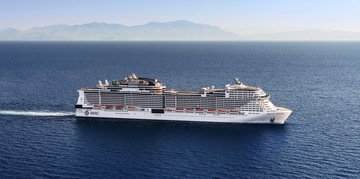
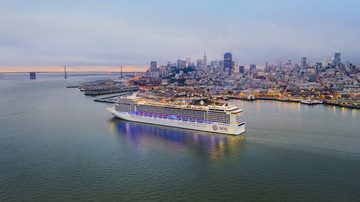
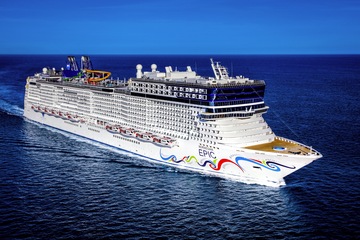
MSC Virtuosa's namesake comes from the word virtuoso, meaning someone highly skilled in any field of activity, and so MSC Virtuosa was named to pay homage to the skill and expertise of the MSC Cruises architects and shipyard partners at Chantiers de l'Atlantique who designed and built this innovative class of ships. MSC Virtuosa, along with her sister ships MSC Meraviglia, MSC Bellissima, MSC Grandiosa and MSC Euribia, belongs to the “Meraviglia Class”, where the impressive array of onboard experiences come together in perfect harmony with the space and the destinations, to deliver the ultimate cruise holiday experience.
Cruise ID: 64827
MSC Starship Club
This futuristic venue is much more than just a bar. It's an immersive entertainment experience. Featuring Rob, the first ever humanoid robotic bartender at sea, the MSC Starship Club will transport our guests to a different world.
As you sip your cosmic cocktail and gaze out of the portholes across the space, Rob and his human colleagues will take you to an exciting journey to discover new galactic destinations.
During your cruise you will meet staff throughout the ship who provide you with excellent service.
They are supported by just as many staff and crew who work hard behind the scenes to ensure you enjoy every moment onboard.
Service Charges / Gratuities
Service Charges / Gratuities are included in the cruise fare.
Tips
MSC Cruises does not recommend tipping individual members of staff.
| Date | Time | Price * | Booking |
|---|---|---|---|
| 12 November 2026 | 07:00 | €363 | Call us to book |
* Price based on lowest available cruise only fare for double occupancy. Subject to change at any time.
The comfort and elegance you need to enjoy your cruise.
Feature
Bathroom with shower, vanity area and hairdryer
Relax and enjoy the sun and the sea breeze from the comfort of your private balcony.
Features
Enjoy a luxurious and unforgettable cruise with 24-Hour Butler service, dedicated concierge, Premium Extra Drink, Internet packages and a world of more privileges.
Features
Benefits
Relax and enjoy the sun and the sea breeze from the comfort of your private balcony.
Features
Benefits
Aurea Suites Exclusive Privileges in addition (For bookings from Feb 3rd 2025 , sailing from Jul 1st, 2025.):
Features
Enjoy a luxurious and unforgettable cruise with 24-Hour Butler service, dedicated concierge, Premium Extra Drink, Internet packages and a world of more privileges.
Features
Benefits
Enjoy a luxurious and unforgettable cruise with 24-Hour Butler service, dedicated concierge, Premium Extra Drink, Internet packages and a world of more privileges.
Features
Benefits
Enjoy a luxurious and unforgettable cruise with 24-Hour Butler service, dedicated concierge, Premium Extra Drink, Internet packages and a world of more privileges.
Features
Main level:
Second level
Benefits
The comfort and elegance you need to enjoy your cruise.
Feature
Make your cruise memorable enjoying an elegant suite with more living space, a large private balcony, and exclusive benefits.
Features
Benefits
Aurea Suites Exclusive Privileges in addition (For bookings from Feb 3rd 2025 , sailing from Jul 1st, 2025.):
Make your cruise memorable enjoying an elegant suite with more living space, a large private balcony, and exclusive benefits.
Features
Benefits
Aurea Suites Exclusive Privileges in addition (For bookings from Feb 3rd 2025 , sailing from Jul 1st, 2025.):
Relax and enjoy the sun and the sea breeze from the comfort of your private balcony.
Features
Bella experience available with guarantee cabins.
Enjoy the view of the Ocean from your comfortable and elegant cabin.
Feature
Make your cruise memorable enjoying an elegant suite with more living space, a large private balcony, and exclusive benefits.
Features
Benefits
Aurea Suites Exclusive Privileges in addition (For bookings from Feb 3rd 2025 , sailing from Jul 1st, 2025.):
Bella experience available with guarantee cabins.
Enjoy the view of the Ocean from your comfortable and elegant cabin.
Feature
Enjoy the view of the Ocean from your comfortable and elegant cabin.
Feature
Enjoy the view of the Ocean from your comfortable and elegant cabin.
Feature
Day 1 Málaga, Spain
As you sail into Malaga you will notice what an idyllic setting the city enjoys on the famous Costa del Sol. To the east of this provincial capital, the coast along the region of La Axarqua is scattered with villages, farmland and sleepy fishing hamlets - the epitome of traditional rural Spain. To the west stretches a continuous city where the razzmatazz and bustle creates a colourful contrast that is easily recognisable as the Costa del Sol. Surrounding the region, the Penibéetica Mountains provide an attractive backdrop overlooking the lower terraced slopes which yield olives and almonds. This spectacular mountain chain shelters the province from cold northerly winds, giving it a reputation as a therapeutic and exotic place in which to escape from cold northern climes. Malaga is also the gateway to many of Andalusia's enchanting historic villages, towns and cities.
Day 2 Alicante, Spain
The provincial capital of the Valencian Community serves as a gateway to the huge influx of tourists that flock to the Costa Blanca resorts every year. Alicante is popular with holidaymakers who arrive for the warm, Mediterranean climate and seemingly endless golden beaches. However, there is much more to this city than sand and sun. With a picturesque waterfront, a hugely impressive castle, buzzing nightlife and a rich, complex history, Alicante is a fascinating destination all year round.
Day 3 Palma de Mallorca, Spain
If you look north of the cathedral (La Seu, or the seat of the bishopric, to Mallorcans) on a map of the city of Palma, you can see around the Plaça Santa Eulàlia a jumble of tiny streets that made up the earliest settlement. Farther out, a ring of wide boulevards traces the fortifications built by the Moors to defend the larger city that emerged by the 12th century. The zigzags mark the bastions that jutted out at regular intervals. By the end of the 19th century, most of the walls had been demolished; the only place where you can still see the massive defenses is at Ses Voltes, along the seafront west of the cathedral.A torrent (streambed) used to run through the middle of the old city, dry for most of the year but often a raging flood in the rainy season. In the 17th century it was diverted to the east, along the moat that ran outside the city walls. Two of Palma's main arteries, La Rambla and the Passeig d'es Born, now follow the stream's natural course. The traditional evening paseo (promenade) takes place on the Born.If you come to Palma by car, park in the garage beneath the Parc de la Mar (the ramp is just off the highway from the airport, as you reach the cathedral) and stroll along the park. Beside it run the huge bastions guarding the Almudaina Palace; the cathedral, golden and massive, rises beyond. Where you exit the garage, there's a ceramic mural by the late Catalan artist and Mallorca resident Joan Miró, facing the cathedral across the pool that runs the length of the park.If you begin early enough, a walk along the ramparts at Ses Voltes from the mirador beside the cathedral is spectacular. The first rays of the sun turn the upper pinnacles of La Seu bright gold and then begin to work their way down the sandstone walls. From the Parc de la Mar, follow Avinguda Antoni Maura past the steps to the palace. Just below the Plaça de la Reina, where the Passeig d'es Born begins, turn left on Carrer de la Boteria into the Plaça de la Llotja (if the Llotja itself is open, don't miss a chance to visit—it's the Mediterranean's finest Gothic-style civic building). From there stroll through the Plaça Drassana to the Museu d'Es Baluard, at the end of Carrer Sant Pere. Retrace your steps to Avinguda Antoni Maura. Walk up the Passeig d'es Born to Plaça Joan Carles I, then right on Avenida de La Unió.
Day 4 Marseille, France
Since being designated a European Capital of Culture for 2013, with an estimated €660 million of funding in the bargain, Marseille has been in the throes of an extraordinary transformation, with no fewer than five major new arts centers, a beautifully refurbished port, revitalized neighborhoods, and a slew of new shops and restaurants. Once the underdog, this time-burnished city is now welcoming an influx of weekend tourists who have colonized entire neighborhoods and transformed them into elegant pieds-à-terre (or should we say, mer). The second-largest city in France, Marseille is one of Europe's most vibrant destinations. Feisty and fond of broad gestures, it is also as complicated and as cosmopolitan now as it was when a band of Phoenician Greeks first sailed into the harbor that is today's Vieux Port in 600 BC. Legend has it that on that same day a local chieftain's daughter, Gyptis, needed to choose a husband, and her wandering eyes settled on the Greeks' handsome commander Protis. Her dowry brought land near the mouth of the Rhône, where the Greeks founded Massalia, the most important Continental shipping port in antiquity. The port flourished for some 500 years as a typical Greek city, enjoying the full flush of classical culture, its gods, its democratic political system, its sports and theater, and its naval prowess. Caesar changed all that, besieging the city in 49 BC and seizing most of its colonies. In 1214 Marseille was seized again, this time by Charles d'Anjou, and was later annexed to France by Henri IV in 1481, but it was not until Louis XIV took the throne that the biggest transformations of the port began; he pulled down the city walls in 1666 and expanded the port to the Rive Neuve (New Riverbank). The city was devastated by plague in 1720, losing more than half its population. By the time of the Revolution, Marseille was on the rebound once again, with industries of soap manufacturing and oil processing flourishing, encouraging a wave of immigration from Provence and Italy. With the opening of the Suez Canal in 1869, Marseille became the greatest boomtown in 19th-century Europe. With a large influx of immigrants from areas as exotic as Tangiers, the city quickly acquired the multicultural population it maintains to this day.
Day 5 Barcelona, Spain
The infinite variety of street life, the nooks and crannies of the medieval Barri Gòtic, the ceramic tile and stained glass of Art Nouveau facades, the art and music, the throb of street life, the food (ah, the food!)—one way or another, Barcelona will find a way to get your full attention. The capital of Catalonia is a banquet for the senses, with its beguiling mix of ancient and modern architecture, tempting cafés and markets, and sun-drenched Mediterranean beaches. A stroll along La Rambla and through waterfront Barceloneta, as well as a tour of Gaudí's majestic Sagrada Famíliaand his other unique creations, are part of a visit to Spain's second-largest city. Modern art museums and chic shops call for attention, too. Barcelona's vibe stays lively well into the night, when you can linger over regional wine and cuisine at buzzing tapas bars.
The Department of Foreign Affairs has up-to-date advice for Irish citizens on staying safe and healthy abroad. For more security, local laws, health, passport and visa information see https://www.ireland.ie/en/dfa/overseas-travel/ and follow dfatravelwise