Price based on lowest available cruise only fare for double occupancy. Subject to change at any time.
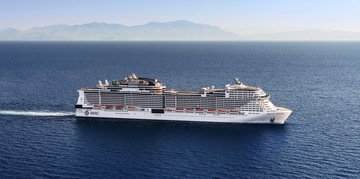
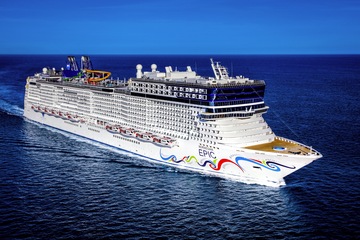
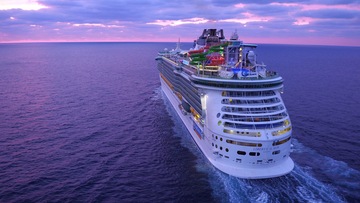
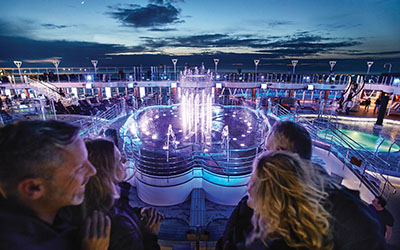
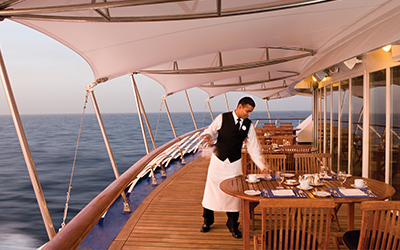
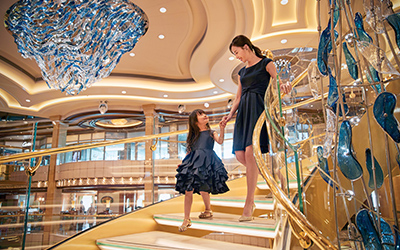
A luxurious boutique hotel at sea, the Azamara Journey is a mid-sized ship with a deck plan that's intimate but never crowded, and offers everything modern voyagers are looking for—plus some unexpected extras.
Cruise ID: 53727
Your Home at Sea
Across the fleet, you will find we go beyond the expectations of even the most well-traveled cruisers, with our top-tier crew, premier service and world class amenities. Our ships, Azamara Journey®, Azamara Quest®, Azamara Pursuit®, and Azamara Onward℠, are perfectly sized to cross oceans, sail into intimate rivers, cruise along scenic waterways, and dock at locations bigger ships can't reach.
Tips & Gratuities are always included
| Date | Time | Price * | Booking |
|---|---|---|---|
| 28 April 2026 | 18:00 | €7,625 | Call us to book |
* Price based on lowest available cruise only fare for double occupancy. Subject to change at any time.
Located next to the tranquil Sanctum Spa, our newest suites are the ultimate in contemporary design, comfort and pampering. With easy access to the Spa, open decks, swimming pool and our great restaurants, the Club Spa Suites surround you with organic, elegant décor, and the finest, most soothing amenities. Suites feature comfortable sitting area, daily delivery of healthy snacks, Frette plush robes and slippers, and in-room spa music. For the ultimate in serene surroundings, the spacious glass-enclosed spa soaking tub and separate rain shower bring the outside in, with views to the endless seas beyond. The perfect place to get away from it all, without being far from anything.
Suite Features
Included Suite Amenities (For cruises sailing before April 1, 2026)
Included Suite Amenities (For cruises on or after April 1, 2026)
A spacious, comfortable home away from home. Suite price based on deck and location of the ship.
Spacious and comfortable, our Continent Suites feature fresh new décor inspired by natural elements. With two beds convertible to a queen, a cozy sitting area, breezy balcony and refreshed bathroom with a bathtub or shower, this is your wonderful, refined home away from home.
Enjoy ocean views and sea breezes on your private veranda. Stateroom price based on deck and location of the ship.
Refreshing sea breezes and stunning destination views come standard in our staterooms that offer your own private veranda. Greet the day with room service on your balcony, or toast to another stunning sunset.
Stateroom Features
Included Stateroom Amenities
Explore the world in comfort and luxury in this stylish, elegant stateroom featuring all the amenities of a boutique hotel at sea. Relax with plush cotton robes, 24-hour room service, and more.
With the polished style and stellar service of a Club Interior Stateroom, you'll enjoy our plush cotton robes, slippers upon request, French bath products, and 24-hour room service.
Stateroom Features
Included Stateroom Amenities
Introducing a new way to see the world with Azamara@. With our Club Veranda Plus Staterooms, enjoy spectacular ocean and destination views, plus a host of guest-favourite amenities—all at a great value. Everything you love about our Club Veranda Staterooms is included, plus extra perks and amenities to elevate your time on board.
Stateroom Features
Included Stateroom Amenities
Explore the world in comfort and luxury in this stylish, elegant stateroom featuring all the amenities of a boutique hotel at sea. Relax with plush cotton robes, 24-hour room service, and more.
With the polished style and stellar service of a Club Interior Stateroom, you'll enjoy our plush cotton robes, slippers upon request, French bath products, and 24-hour room service.
Stateroom Features
Included Stateroom Amenities
Revel in the polished style and stellar service of your own private retreat, boasting a modern and contemporary décor. Enjoy picturesque ocean views outside your window, and all the finer touches included in every stateroom.
A vacation home with an ocean view, our Club Oceanview Staterooms offer all the style and amenities of a boutique hotel. Relax with plush cotton robes, slippers upon request, French bath products, and 24-hour room service.
Stateroom Features
Included Stateroom Amenities
Our largest and most luxurious suite.
Our largest suites have been transformed with contemporary design elements that are both elegant and organic, with design that draws inspiration from nature—a sandy cliff, flowing river beds, exquisite white sand beaches, and rustling grasses. Enjoy a spacious living room, separate bedroom and all the amenities that come with our most luxurious suite.
Suite Features
Included Suite Amenities (For cruises sailing before April 1, 2026)
Included Suite Amenities (For cruises on or after April 1, 2026)
Enjoy a spacious, restful retreat.
With a large living room and a separate bedroom—plus your own private veranda—your suite offers a restful retreat after your immersive experiences on land. Enjoy elegant, contemporary décor, and rich marble touches. You'll be spoiled by the attention to detail in these beautiful suites, and of course, all the pampering too.
Suite Features
Spacious living room with a separate master bedroom
Included Suite Amenities (For cruises sailing before April 1, 2026)
Included Suite Amenities (For cruises on or after April 1, 2026)
Spacious and comfortable, our Continent Suites feature fresh new décor inspired by natural elements. With two beds convertible to a queen, a cozy sitting area, breezy balcony and refreshed bathroom with a bathtub or shower, this is your wonderful, refined home away from home.
Suite Features
Included Suite Amenities (For cruises sailing before April 1, 2026)
Included Suite Amenities (For cruises on or after April 1, 2026)
Introducing a new way to see the world with Azamara@. With our Club Veranda Plus Staterooms, enjoy spectacular ocean and destination views, plus a host of guest-favourite amenities—all at a great value. Everything you love about our Club Veranda Staterooms is included, plus extra perks and amenities to elevate your time on board.
Stateroom Features
Included Stateroom Amenities
Revel in the polished style and stellar service of your own private retreat, boasting a modern and contemporary décor. Enjoy picturesque ocean views outside your window, and all the finer touches included in every stateroom.
A vacation home with an ocean view, our Club Oceanview Staterooms offer all the style and amenities of a boutique hotel. Relax with plush cotton robes, slippers upon request, French bath products, and 24-hour room service.
Stateroom Features
Enjoy ocean views and sea breezes on your private veranda. Stateroom price based on deck and location of the ship.
Refreshing sea breezes and stunning destination views come standard in our staterooms that offer your own private veranda. Greet the day with room service on your balcony, or toast to another stunning sunset.
Stateroom Features
Included Stateroom Amenities
Day 1 Nice, France
United with France only since 1860, Nice has its own history and atmosphere, which dates back 230,000 years. It was on Colline du Château (now château-less) and at the Plage des Ponchettes, in front of the Old Town, that the Greeks established a market-port in 350 BC and named it Nikaia, which would become Marseilles' chief coastal rival. The Romans established themselves a little later on the hills of Cimiez (Cemenelum), already previously occupied by Ligurians and Celts, and quickly overshadowed the waterfront port. After falling to the Saracen invasions, Nice regained power as an independent state, becoming an important port in the early Middle Ages.So cocksure did it become that in 1388, Nice, along with the hill towns behind, effectively seceded from the county of Provence, under Louis d'Anjou, and allied itself with Savoie. Thus began its liaison with the House of Savoy, and through it with Piedmont and Sardinia, it was the Comté de Nice (Nice County). This relationship lasted some 500 years, tinting the culture, architecture, and dialect in rich Italian hues.By the 19th century Nice was flourishing commercially, locked in rivalry with the neighboring shipping port of Genoa. Another source of income: the dawning of tourism, as first the English, then the Russian nobility, discovered its extraordinary climate and superb waterfront position. A parade of fine stone mansions and hotels closed into a nearly solid wall of masonry, separated from the smooth-round rocks of the beach by what was originally named Camin deis Anglés (the English Way), which of course is now the famous Promenade des Anglais. This magnificent crescent, which is seeking UNESCO recognition, is one of the noblest in France. Many of Nice's most delightful attractions—the Cours Saleya market, the Old Town streets, the Hotel Negresco, and the Palais Masséna—are on or close to this 10-km (6-mile) waterfront, making it the first stop for most visitors, while the redevelopment of Nice's port, around the other side of the Colline du Château, makes it easier for amblers who want to take in the Genoese architecture or peruse the antiques at the Puces de Nice, now part of the Promenade des 100 Antiquaires, along Quai Papacino. Nice also has the distinction of the "Family Plus" label, with free strollers, play areas, and restaurants with child-friendly activities.
Day 2 Portoferraio, Italy
Elba is the Tuscan archipelago's largest island, but it resembles nearby verdant Corsica more than it does its rocky Italian sisters, thanks to a network of underground springs that keep it lush and green. It's this combination of semitropical vegetation and dramatic mountain scenery—unusual in the Mediterranean—that has made Elba so prized for so long, and the island's uniqueness continues to draw boatloads of visitors throughout the warm months. A car is very useful for getting around the island, but public buses stop at most towns several times a day; the tourist office has timetables.
Day 3 Porto, Corsica, France
Day 4 Cagliari, Italy
Known in Sardinia as Casteddu, the island's capital has steep streets and impressive Italianate architecture, from modern to medieval. This city of nearly 160,000 people is characterized by a busy commercial center and waterfront with broad avenues and arched arcades, as well as by the typically narrow streets of the old hilltop citadel (called, simply, “Castello”). The Museo Archeologico makes a good starting point to a visit. The imposing Bastione di Saint Remy and Mercato di San Benedetto (one of the best fish markets in Italy) are both musts.
Day 5 La Goulette, Tunisia
Day 6 Valletta, Malta
Malta's capital, the minicity of Valletta, has ornate palaces and museums protected by massive fortifications of honey-color limestone. Houses along the narrow streets have overhanging wooden balconies for people-watching from indoors. Generations ago they gave housebound women a window on the world of the street. The main entrance to town is through the City Gate (where all bus routes end), which leads onto Triq Repubblika (Republic Street), the spine of the grid-pattern city and the main shopping street. Triq Mercante (Merchant Street) parallels Repubblika to the east and is also good for strolling. From these two streets, cross streets descend toward the water; some are stepped. Valletta's compactness makes it ideal to explore on foot. City Gate and the upper part of Valletta are experiencing vast redevelopment that includes a new Parliament Building and open-air performance venue. The complex, completed mid-2013, has numerous pedestrian detours in place along with building noise and dust. Before setting out along Republic Street, stop at the tourist information office on Merchant Street for maps and brochures.
Day 7 Mgarr, Gozo, Malta
Day 8 Siracuse, Sicily, Italy
Siracusa, known to English speakers as Syracuse, is a wonder to behold. One of the great ancient capitals of Western civilization, the city was founded in 734 BC by Greek colonists from Corinth and soon grew to rival, and even surpass, Athens in splendor and power. It became the largest, wealthiest city-state in the West and a bulwark of Greek civilization. Although Siracusa lived under tyranny, rulers such as Dionysius filled their courts with Greeks of the highest cultural stature—among them the playwrights Aeschylus and Euripides, and the philosopher Plato. The Athenians, who didn't welcome Siracusa's rise, set out to conquer Sicily, but the natives outsmarted them in what was one of the greatest military campaigns in ancient history (413 BC). The city continued to prosper until it was conquered two centuries later by the Romans.Present-day Siracusa still has some of the finest examples of Baroque art and architecture; dramatic Greek and Roman ruins; and a Duomo that's the stuff of legend—a microcosm of the city's entire history in one building. The modern city also has a wonderful, lively, Baroque old town worthy of extensive exploration, as well as pleasant piazzas, outdoor cafés and bars, and a wide assortment of excellent seafood. There are essentially two areas to explore in Siracusa: the Parco Archeologico (Archaeological Zone), on the mainland; and the island of Ortygia, the ancient city first inhabited by the Greeks, which juts out into the Ionian Sea and is connected to the mainland by two small bridges. Ortygia is becoming increasingly popular with tourists, and is starting to lose its old-fashioned charm in favor of modern boutiques.Siracusa's old nucleus of Ortygia, a compact area, is a pleasure to amble around without getting unduly tired. In contrast, mainland Siracusa is a grid of wider avenues. At the northern end of Corso Gelone, above Viale Paolo Orsi, the orderly grid gives way to the ancient quarter of Neapolis, where the sprawling Parco Archeologico is accessible from Viale Teracati (an extension of Corso Gelone). East of Viale Teracati, about a 10-minute walk from the Parco Archeologico, the district of Tyche holds the archaeological museum and the church and catacombs of San Giovanni, both off Viale Teocrito (drive or take a taxi or city bus from Ortygia). Coming from the train station, it's a 15-minute trudge to Ortygia along Via Francesco Crispi and Corso Umberto. If you're not up for that, take one of the free electric buses leaving every 10 minutes from the bus station around the corner.
Day 9 Taormina, Italy
The medieval cliff-hanging town of Taormina is overrun with tourists, yet its natural beauty is still hard to dispute. The view of the sea and Mt. Etna from its jagged cactus-covered cliffs is as close to perfection as a panorama can get—especially on clear days, when the snowcapped volcano's white puffs of smoke rise against the blue sky. Writers have extolled Taormina's beauty almost since it was founded in the 6th century BC by Greeks from nearby Naxos; Goethe and D. H. Lawrence were among its well-known enthusiasts. The town's boutique-lined main streets get old pretty quickly, but the many hiking paths that wind through the beautiful hills surrounding Taormina promise a timeless alternative. A trip up to stunning Castelmola (whether on foot or by car) should also be on your itinerary.
Day 10 Cruising
Day 11 Heraklion (Iraklion), Crete, Greece
Having been controlled by Arabic, Venetian and Ottoman empires over the years - it's no surprise that Heraklion is a diverse patchwork of exotic cultures and historical treasures. Celebrated as the birthplace of the Spanish Renaissance artist, El Greco, you can visit to explore the storied ruins of the Minoan empire's capital, and unearth the rich cultural treasures that Crete's bustling modern capital has to offer.
Day 12 Santorini, Greece
Undoubtedly the most extraordinary island in the Aegean, crescent-shape Santorini remains a mandatory stop on the Cycladic tourist route—even if it's necessary to enjoy the sensational sunsets from Ia, the fascinating excavations, and the dazzling white towns with a million other travelers. Called Kállisti (the "Loveliest") when first settled, the island has now reverted to its subsequent name of Thira, after the 9th-century-BC Dorian colonizer Thiras. The place is better known, however, these days as Santorini, a name derived from its patroness, St. Irene of Thessaloniki, the Byzantine empress who restored icons to Orthodoxy and died in 802. You can fly conveniently to Santorini, but to enjoy a true Santorini rite of passage, opt instead for the boat trip here, which provides a spectacular introduction. After the boat sails between Sikinos and Ios, your deck-side perch approaches two close islands with a passage between them. The bigger one on the left is Santorini, and the smaller on the right is Thirassia. Passing between them, you see the village of Ia adorning Santorini's northernmost cliff like a white geometric beehive. You are in the caldera (volcanic crater), one of the world's truly breathtaking sights: a demilune of cliffs rising 1,100 feet, with the white clusters of the towns of Fira and Ia perched along the top. The bay, once the high center of the island, is 1,300 feet in some places, so deep that when boats dock in Santorini's shabby little port of Athinios, they do not drop anchor. The encircling cliffs are the ancient rim of a still-active volcano, and you are sailing east across its flooded caldera. On your right are the Burnt isles, the White isle, and other volcanic remnants, all lined up as if some outsize display in a geology museum. Hephaestus's subterranean fires smolder still—the volcano erupted in 198 BC, about 735, and there was an earthquake in 1956. Indeed, Santorini and its four neighboring islets are the fragmentary remains of a larger landmass that exploded about 1600 BC: the volcano's core blew sky high, and the sea rushed into the abyss to create the great bay, which measures 10 km by 7 km (6 mi by 4½ mi) and is 1,292 feet deep. The other pieces of the rim, which broke off in later eruptions, are Thirassia, where a few hundred people live, and deserted little Aspronissi ("White isle"). In the center of the bay, black and uninhabited, two cones, the Burnt Isles of Palea Kameni and Nea Kameni, appeared between 1573 and 1925. There has been too much speculation about the identification of Santorini with the mythical Atlantis, mentioned in Egyptian papyri and by Plato (who says it's in the Atlantic), but myths are hard to pin down. This is not true of old arguments about whether tidal waves from Santorini's cataclysmic explosion destroyed Minoan civilization on Crete, 113 km (70 mi) away. The latest carbon-dating evidence, which points to a few years before 1600 BC for the eruption, clearly indicates that the Minoans outlasted the eruption by a couple of hundred years, but most probably in a weakened state. In fact, the island still endures hardships: since antiquity, Santorini has depended on rain collected in cisterns for drinking and irrigating—the well water is often brackish—and the serious shortage is alleviated by the importation of water. However, the volcanic soil also yields riches: small, intense tomatoes with tough skins used for tomato paste (good restaurants here serve them); the famous Santorini fava beans, which have a light, fresh taste; barley; wheat; and white-skin eggplants.
Day 13 Athens, Greece
Day 14 Çesme, Turkey
Day 15 Heraklion (Iraklion), Crete, Greece
Having been controlled by Arabic, Venetian and Ottoman empires over the years - it's no surprise that Heraklion is a diverse patchwork of exotic cultures and historical treasures. Celebrated as the birthplace of the Spanish Renaissance artist, El Greco, you can visit to explore the storied ruins of the Minoan empire's capital, and unearth the rich cultural treasures that Crete's bustling modern capital has to offer.
Day 16 Cruising
Day 17 Catania, Italy
Catania is an ancient port city on Sicily's east coast. It sits at the foot of Mt. Etna, an active volcano with trails leading up to the summit. The city's wide central square, Piazza del Duomo, features the whimsical Fontana dell'Elefante statue and richly decorated Catania Cathedral. In the southwest corner of the square, La Pescheria weekday fish market is a rowdy spectacle surrounded by seafood restaurants.
Day 18 Sorrento, Italy
Sorrento may have become a jumping-off point for visitors to Pompeii, Capri, and Amalfi, but you can find countless reasons to love it for itself. The Sorrentine people are fair-minded and hardworking, bubbling with life and warmth. The tuff cliff on which the town rests is spread over the bay, absorbing sunlight, while orange and lemon trees waft their perfume in spring. Winding along a cliff above a small beach and two harbors, the town is split in two by a narrow ravine formed by a former mountain stream. To the east, dozens of hotels line busy Via Correale along the cliff—many have "grand" included in their names, and some indeed still are. To the west, however, is the historic sector, which still enchants. It's a relatively flat area, with winding, stone-paved lanes bordered by balconied buildings, some joined by medieval stone arches. The central piazza is named after the poet Torquato Tasso, born here in 1544. This part of town is a delightful place to walk through. Craftspeople are often at work in their stalls and shops and are happy to let you watch; in fact, that's the point. Music spots and bars cluster in the side streets near Piazza Tasso.
Day 19 Civitavecchia, Italy
Italy's vibrant capital lives in the present, but no other city on earth evokes its past so powerfully. For over 2,500 years, emperors, popes, artists, and common citizens have left their mark here. Archaeological remains from ancient Rome, art-stuffed churches, and the treasures of Vatican City vie for your attention, but Rome is also a wonderful place to practice the Italian-perfected il dolce far niente, the sweet art of idleness. Your most memorable experiences may include sitting at a caffè in the Campo de' Fiori or strolling in a beguiling piazza.
Day 20 Livorno, Italy
Livorno is a gritty city with a long and interesting history. In the early Middle Ages it alternately belonged to Pisa and Genoa. In 1421 Florence, seeking access to the sea, bought it. Cosimo I (1519–74) started construction of the harbor in 1571, putting Livorno on the map. After Ferdinando I de' Medici (1549–1609) proclaimed Livorno a free city, it became a haven for people suffering from religious persecution; Roman Catholics from England and Jews and Moors from Spain and Portugal, among others, settled here. The Quattro Mori (Four Moors), also known as the Monument to Ferdinando I, commemorates this. (The statue of Ferdinando I dates from 1595, the bronze Moors by Pietro Tacca from the 1620s.)In the following centuries, and particularly in the 18th, Livorno boomed as a port. In the 19th century the town drew a host of famous Britons passing through on their grand tours. Its prominence continued up to World War II, when it was heavily bombed. Much of the town's architecture, therefore, postdates the war, and it's somewhat difficult to imagine what it might have looked like before. Livorno has recovered from the war, however, as it's become a huge point of departure for container ships, as well as the only spot in Tuscany for cruise ships to dock for the day.Most of Livorno's artistic treasures date from the 17th century and aren't all that interesting unless you dote on obscure baroque artists. Livorno's most famous native artist, Amedeo Modigliani (1884–1920), was of much more recent vintage. Sadly, there's no notable work by him in his hometown.There may not be much in the way of art, but it's still worth strolling around the city. The Mercato Nuovo, which has been around since 1894, sells all sorts of fruits, vegetables, grains, meat, and fish. Outdoor markets nearby are also chock-full of local color. The presence of Camp Darby, an American military base just outside town, accounts for the availability of many American products.If you have time, Livorno is worth a stop for lunch or dinner at the very least.
Day 21 Nice, France
United with France only since 1860, Nice has its own history and atmosphere, which dates back 230,000 years. It was on Colline du Château (now château-less) and at the Plage des Ponchettes, in front of the Old Town, that the Greeks established a market-port in 350 BC and named it Nikaia, which would become Marseilles' chief coastal rival. The Romans established themselves a little later on the hills of Cimiez (Cemenelum), already previously occupied by Ligurians and Celts, and quickly overshadowed the waterfront port. After falling to the Saracen invasions, Nice regained power as an independent state, becoming an important port in the early Middle Ages.So cocksure did it become that in 1388, Nice, along with the hill towns behind, effectively seceded from the county of Provence, under Louis d'Anjou, and allied itself with Savoie. Thus began its liaison with the House of Savoy, and through it with Piedmont and Sardinia, it was the Comté de Nice (Nice County). This relationship lasted some 500 years, tinting the culture, architecture, and dialect in rich Italian hues.By the 19th century Nice was flourishing commercially, locked in rivalry with the neighboring shipping port of Genoa. Another source of income: the dawning of tourism, as first the English, then the Russian nobility, discovered its extraordinary climate and superb waterfront position. A parade of fine stone mansions and hotels closed into a nearly solid wall of masonry, separated from the smooth-round rocks of the beach by what was originally named Camin deis Anglés (the English Way), which of course is now the famous Promenade des Anglais. This magnificent crescent, which is seeking UNESCO recognition, is one of the noblest in France. Many of Nice's most delightful attractions—the Cours Saleya market, the Old Town streets, the Hotel Negresco, and the Palais Masséna—are on or close to this 10-km (6-mile) waterfront, making it the first stop for most visitors, while the redevelopment of Nice's port, around the other side of the Colline du Château, makes it easier for amblers who want to take in the Genoese architecture or peruse the antiques at the Puces de Nice, now part of the Promenade des 100 Antiquaires, along Quai Papacino. Nice also has the distinction of the "Family Plus" label, with free strollers, play areas, and restaurants with child-friendly activities.
Day 22 Marseille, France
Since being designated a European Capital of Culture for 2013, with an estimated €660 million of funding in the bargain, Marseille has been in the throes of an extraordinary transformation, with no fewer than five major new arts centers, a beautifully refurbished port, revitalized neighborhoods, and a slew of new shops and restaurants. Once the underdog, this time-burnished city is now welcoming an influx of weekend tourists who have colonized entire neighborhoods and transformed them into elegant pieds-à-terre (or should we say, mer). The second-largest city in France, Marseille is one of Europe's most vibrant destinations. Feisty and fond of broad gestures, it is also as complicated and as cosmopolitan now as it was when a band of Phoenician Greeks first sailed into the harbor that is today's Vieux Port in 600 BC. Legend has it that on that same day a local chieftain's daughter, Gyptis, needed to choose a husband, and her wandering eyes settled on the Greeks' handsome commander Protis. Her dowry brought land near the mouth of the Rhône, where the Greeks founded Massalia, the most important Continental shipping port in antiquity. The port flourished for some 500 years as a typical Greek city, enjoying the full flush of classical culture, its gods, its democratic political system, its sports and theater, and its naval prowess. Caesar changed all that, besieging the city in 49 BC and seizing most of its colonies. In 1214 Marseille was seized again, this time by Charles d'Anjou, and was later annexed to France by Henri IV in 1481, but it was not until Louis XIV took the throne that the biggest transformations of the port began; he pulled down the city walls in 1666 and expanded the port to the Rive Neuve (New Riverbank). The city was devastated by plague in 1720, losing more than half its population. By the time of the Revolution, Marseille was on the rebound once again, with industries of soap manufacturing and oil processing flourishing, encouraging a wave of immigration from Provence and Italy. With the opening of the Suez Canal in 1869, Marseille became the greatest boomtown in 19th-century Europe. With a large influx of immigrants from areas as exotic as Tangiers, the city quickly acquired the multicultural population it maintains to this day.
Day 23 Palamós, Spain
One of the best ways to arrive in Catalonia is by sea, especially via the Costa Brava. This coastline, also known as the Rugged or Wild Coast, stretches from Blanes to the French border. Its name aptly refers to the steep cliff of ancient twisted rocks, which runs its entire length and is bounded inland by the Catalan mountain ranges. The intensity of the coast's colour, the ruggedness of the rocks and the scent of the plants all combine to add to its attraction. The history of this region is long and varied. Traces can be found of the advanced culture of the Iberians, Greeks, Romans, Visigoths and Arabs. With Wilfred I and the independence of Catalan countries, the Catalan dynasty was born. Later, in 1479, Catalonia became a part of unified Spain following the marriage of Isabel, Queen of Castile, and Fernando, King of Aragon. The port of Palamos, some 36 miles northeast of Barcelona, has been in existence for nearly 700 years thanks to its location on one of the deepest natural bays in the western Mediterranean. The town itself is the southernmost of a series of resorts popular with sun worshippers. For the most part, Palamos has managed to retain some of the charm of a fishing village. The port also serves as a gateway to such inland locations as Girona, the capital of the province. Art lovers may want to visit Figueras, famous for its bizarre Teatre-Museu Dali, the foremost of a series of sites associated with the eccentric surrealist artist, Salvador Dali. If you choose to stay in Palamos, you can enjoy the pleasant atmosphere of the town or spend some time at a nearby beach. The town has a long seagoing tradition and busy harbour. The fish auction, prompted by the arrival of the fishing boats, is a spectacle worth seeing. The Fishing Museum illustrates the history and the life of the families who live off the sea.
Day 24 Barcelona, Spain
The infinite variety of street life, the nooks and crannies of the medieval Barri Gòtic, the ceramic tile and stained glass of Art Nouveau facades, the art and music, the throb of street life, the food (ah, the food!)—one way or another, Barcelona will find a way to get your full attention. The capital of Catalonia is a banquet for the senses, with its beguiling mix of ancient and modern architecture, tempting cafés and markets, and sun-drenched Mediterranean beaches. A stroll along La Rambla and through waterfront Barceloneta, as well as a tour of Gaudí's majestic Sagrada Famíliaand his other unique creations, are part of a visit to Spain's second-largest city. Modern art museums and chic shops call for attention, too. Barcelona's vibe stays lively well into the night, when you can linger over regional wine and cuisine at buzzing tapas bars.
The Department of Foreign Affairs has up-to-date advice for Irish citizens on staying safe and healthy abroad. For more security, local laws, health, passport and visa information see https://www.ireland.ie/en/dfa/overseas-travel/ and follow dfatravelwise