Price based on lowest available cruise only fare for double occupancy. Subject to change at any time.
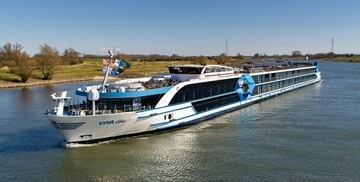
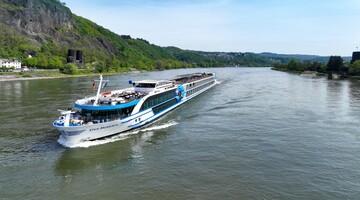
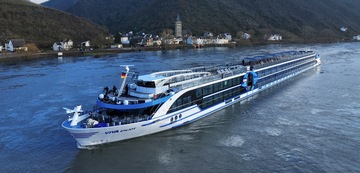
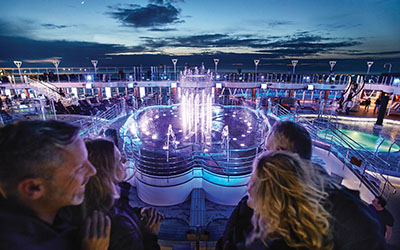
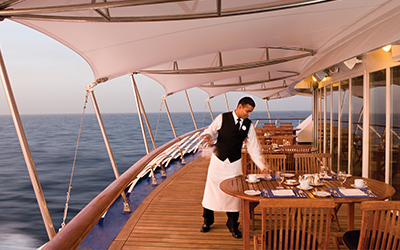
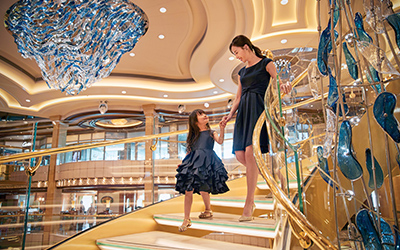
Come on an unforgettable journey with the VIVA TIARA. Freshly renovated in 2020, the four-star cruise ship invites you to spend cozy and relaxing moments on board. The modern and spacious design of the VIVA TIARA will captivate you from the first glance inside. Here you can enjoy your vacation to the fullest. Indulge in gourmet dining in the main Riverside restaurant or VIVA's Bistro, or relax in the whirlpool on deck. Treat yourself to a quiet moment in the sauna or steam room, or challenge yourself and your opponent with a game of chess on the sun deck. The panoramic lounge invites you to enjoy a drink with a beautiful view after an eventful day. Experience unforgettable moments on the VIVA TIARA.
On the VIVA TIARA, freshly renovated in 2020, 76 exclusively equipped cabins for 152 guests provide relaxing feel-good moments. The majority of the cabins on the Diamond, Ruby and Emerald decks are 15 m² 2-bed cabins, from which you can enjoy the passing landscape via a French balcony on the Diamond and Ruby decks. On the Ruby and Diamond decks there are two additional 17 m² Junior Suites, which also have a French balcony. The cabins on the Emerald Deck have windows that cannot be opened. All cabins are perfectly equipped with flat-screen TV, included mini-bar, Nespresso® machine, beauty products by RITUALS®, hairdryer, safe, air conditioning, shower and toilet. An elevator connects the lobby with the Diamond Deck, Ruby Deck and the restaurant. On the VIVA TIARA, in addition to the main restaurant Riverside, guests can expect a bistro included in the VIVA All-Inclusive, as well as a wellness area with sauna and steam bath, among other things, and the sun deck with whirlpool and many deck chairs and other seating.
Cruise ID: 64044
With VIVA Cruises you get the all-round carefree package on board, i.e. even the tip is already included in your cruise price. Our on-board staff is always happy to assist you and will make sure you have an unforgettable cruise.
| Date | Time | Price * | Booking |
|---|---|---|---|
| 18 September 2026 | 18:30 | €1,319 | Call us to book |
| 23 September 2026 | 18:30 | €1,560 | Call us to book |
| 28 September 2026 | 18:30 | €1,319 | Call us to book |
| 03 October 2026 | 18:30 | €1,319 | Call us to book |
* Price based on lowest available cruise only fare for double occupancy. Subject to change at any time.
EQUIPMENT:
EQUIPMENT:
Day 1 Basel, Switzerland
Basel is a city in northwestern Switzerland on the Swiss, French and German borders. It is located on the bend of the River Rhine and benefits from a Mediterranean climate. It is the third most populated city in Switzerland and has been the commercial hub for Swiss arts and culture since the Renaissance. In 1967 the people of Basel voted to acquire two paintings by Picasso, who was so moved by the Basel people that he donated 3 paintings and a study to the city's Kunstmuseum (Museum of Fine Arts). Visit the Augusta Raurica, one of the largest Roman archaeology parks in Switzerland, and enjoy a river crossings over the River Rhine by non-motorised ferries. During the summer months, time is spent outdoors, either swimming in the River Rhine, dining al fresco, enjoying open air concerts, cinema, street parties and festivals. Basel is home to over 20 restaurants that have won GaultMillau or Michelin awards, and boasts Switzerland's largest collection of theatre shows, including modern contemporary dance, touring and puppetry theatre.
Day 2 Strasbourg, France
Day 3 Frankfurt, Germany
Day 4 Speyer, Germany
Speyer is a town located in southwest Germany situated beside the river Rhine. Originally founded by the Romans, it is one of the oldest settlements in Germany and is situated in the popular wine growing region of the Palatinate. A key attraction of Speyer is the Historical Museum of the Palatinate, which is one of the most celebrated culture-history museums in Germany. It features five permanent collections including Prehistory, Roman Times, Cathedral Treasury, Modern Era and Wine Museum. Not far from the museum, visitors will find the Imperial Cathedral, a UNESCO World Heritage Site, which is considered the largest preserved Romanesque church in Europe. Originally constructed by Konrad II, this magnificent and looming building was intended to demonstrate the Lord's religio-political claim to power against the papacy. Speyer has been producing wine since its Roman beginnings and wine tasting, festivals and events are popular all year round. The town is popular for outdoor activities such as hiking and cycling as well as guided walking tours of the town.
Day 5 Breisach, Germany
Breisach is a town located in Southwest Germany on the French border. The town is situated in the Rhine Valley on the banks of the river Rhine and dates back over four thousand years. Breisach and its history can be experienced through the City History Museum, which houses a permanent exhibition taking you from Stone Age through the Celtic, to the Romans and Middle Ages, right up to modern day. St Stephen's Cathedral is home to the city's famous art treasures, the wheel wells, which are housed in the neighbouring Radbrunnenturm with the forty one metre deep water well. The cathedral is also home to many other treasures including the High Altar of Master HL and wall paintings by Martin Schongauer as well as High Gothic and Roman architecture. A visit to the Blue House, the former Jewish Community Centre, is highly recommended. Now owned by the Friends of Former Jewish Community House Breisach it exhibits memorials to Breisach's Jewish heritage.
Day 6 Basel, Switzerland
Basel is a city in northwestern Switzerland on the Swiss, French and German borders. It is located on the bend of the River Rhine and benefits from a Mediterranean climate. It is the third most populated city in Switzerland and has been the commercial hub for Swiss arts and culture since the Renaissance. In 1967 the people of Basel voted to acquire two paintings by Picasso, who was so moved by the Basel people that he donated 3 paintings and a study to the city's Kunstmuseum (Museum of Fine Arts). Visit the Augusta Raurica, one of the largest Roman archaeology parks in Switzerland, and enjoy a river crossings over the River Rhine by non-motorised ferries. During the summer months, time is spent outdoors, either swimming in the River Rhine, dining al fresco, enjoying open air concerts, cinema, street parties and festivals. Basel is home to over 20 restaurants that have won GaultMillau or Michelin awards, and boasts Switzerland's largest collection of theatre shows, including modern contemporary dance, touring and puppetry theatre.
Day 1 Basel, Switzerland
Basel is a city in northwestern Switzerland on the Swiss, French and German borders. It is located on the bend of the River Rhine and benefits from a Mediterranean climate. It is the third most populated city in Switzerland and has been the commercial hub for Swiss arts and culture since the Renaissance. In 1967 the people of Basel voted to acquire two paintings by Picasso, who was so moved by the Basel people that he donated 3 paintings and a study to the city's Kunstmuseum (Museum of Fine Arts). Visit the Augusta Raurica, one of the largest Roman archaeology parks in Switzerland, and enjoy a river crossings over the River Rhine by non-motorised ferries. During the summer months, time is spent outdoors, either swimming in the River Rhine, dining al fresco, enjoying open air concerts, cinema, street parties and festivals. Basel is home to over 20 restaurants that have won GaultMillau or Michelin awards, and boasts Switzerland's largest collection of theatre shows, including modern contemporary dance, touring and puppetry theatre.
Day 2 Strasbourg, France
Day 3 Frankfurt, Germany
Day 4 Speyer, Germany
Speyer is a town located in southwest Germany situated beside the river Rhine. Originally founded by the Romans, it is one of the oldest settlements in Germany and is situated in the popular wine growing region of the Palatinate. A key attraction of Speyer is the Historical Museum of the Palatinate, which is one of the most celebrated culture-history museums in Germany. It features five permanent collections including Prehistory, Roman Times, Cathedral Treasury, Modern Era and Wine Museum. Not far from the museum, visitors will find the Imperial Cathedral, a UNESCO World Heritage Site, which is considered the largest preserved Romanesque church in Europe. Originally constructed by Konrad II, this magnificent and looming building was intended to demonstrate the Lord's religio-political claim to power against the papacy. Speyer has been producing wine since its Roman beginnings and wine tasting, festivals and events are popular all year round. The town is popular for outdoor activities such as hiking and cycling as well as guided walking tours of the town.
Day 5 Breisach, Germany
Breisach is a town located in Southwest Germany on the French border. The town is situated in the Rhine Valley on the banks of the river Rhine and dates back over four thousand years. Breisach and its history can be experienced through the City History Museum, which houses a permanent exhibition taking you from Stone Age through the Celtic, to the Romans and Middle Ages, right up to modern day. St Stephen's Cathedral is home to the city's famous art treasures, the wheel wells, which are housed in the neighbouring Radbrunnenturm with the forty one metre deep water well. The cathedral is also home to many other treasures including the High Altar of Master HL and wall paintings by Martin Schongauer as well as High Gothic and Roman architecture. A visit to the Blue House, the former Jewish Community Centre, is highly recommended. Now owned by the Friends of Former Jewish Community House Breisach it exhibits memorials to Breisach's Jewish heritage.
Day 6 Basel, Switzerland
Basel is a city in northwestern Switzerland on the Swiss, French and German borders. It is located on the bend of the River Rhine and benefits from a Mediterranean climate. It is the third most populated city in Switzerland and has been the commercial hub for Swiss arts and culture since the Renaissance. In 1967 the people of Basel voted to acquire two paintings by Picasso, who was so moved by the Basel people that he donated 3 paintings and a study to the city's Kunstmuseum (Museum of Fine Arts). Visit the Augusta Raurica, one of the largest Roman archaeology parks in Switzerland, and enjoy a river crossings over the River Rhine by non-motorised ferries. During the summer months, time is spent outdoors, either swimming in the River Rhine, dining al fresco, enjoying open air concerts, cinema, street parties and festivals. Basel is home to over 20 restaurants that have won GaultMillau or Michelin awards, and boasts Switzerland's largest collection of theatre shows, including modern contemporary dance, touring and puppetry theatre.
Day 1 Basel, Switzerland
Basel is a city in northwestern Switzerland on the Swiss, French and German borders. It is located on the bend of the River Rhine and benefits from a Mediterranean climate. It is the third most populated city in Switzerland and has been the commercial hub for Swiss arts and culture since the Renaissance. In 1967 the people of Basel voted to acquire two paintings by Picasso, who was so moved by the Basel people that he donated 3 paintings and a study to the city's Kunstmuseum (Museum of Fine Arts). Visit the Augusta Raurica, one of the largest Roman archaeology parks in Switzerland, and enjoy a river crossings over the River Rhine by non-motorised ferries. During the summer months, time is spent outdoors, either swimming in the River Rhine, dining al fresco, enjoying open air concerts, cinema, street parties and festivals. Basel is home to over 20 restaurants that have won GaultMillau or Michelin awards, and boasts Switzerland's largest collection of theatre shows, including modern contemporary dance, touring and puppetry theatre.
Day 2 Strasbourg, France
Day 3 Frankfurt, Germany
Day 4 Speyer, Germany
Speyer is a town located in southwest Germany situated beside the river Rhine. Originally founded by the Romans, it is one of the oldest settlements in Germany and is situated in the popular wine growing region of the Palatinate. A key attraction of Speyer is the Historical Museum of the Palatinate, which is one of the most celebrated culture-history museums in Germany. It features five permanent collections including Prehistory, Roman Times, Cathedral Treasury, Modern Era and Wine Museum. Not far from the museum, visitors will find the Imperial Cathedral, a UNESCO World Heritage Site, which is considered the largest preserved Romanesque church in Europe. Originally constructed by Konrad II, this magnificent and looming building was intended to demonstrate the Lord's religio-political claim to power against the papacy. Speyer has been producing wine since its Roman beginnings and wine tasting, festivals and events are popular all year round. The town is popular for outdoor activities such as hiking and cycling as well as guided walking tours of the town.
Day 5 Breisach, Germany
Breisach is a town located in Southwest Germany on the French border. The town is situated in the Rhine Valley on the banks of the river Rhine and dates back over four thousand years. Breisach and its history can be experienced through the City History Museum, which houses a permanent exhibition taking you from Stone Age through the Celtic, to the Romans and Middle Ages, right up to modern day. St Stephen's Cathedral is home to the city's famous art treasures, the wheel wells, which are housed in the neighbouring Radbrunnenturm with the forty one metre deep water well. The cathedral is also home to many other treasures including the High Altar of Master HL and wall paintings by Martin Schongauer as well as High Gothic and Roman architecture. A visit to the Blue House, the former Jewish Community Centre, is highly recommended. Now owned by the Friends of Former Jewish Community House Breisach it exhibits memorials to Breisach's Jewish heritage.
Day 6 Basel, Switzerland
Basel is a city in northwestern Switzerland on the Swiss, French and German borders. It is located on the bend of the River Rhine and benefits from a Mediterranean climate. It is the third most populated city in Switzerland and has been the commercial hub for Swiss arts and culture since the Renaissance. In 1967 the people of Basel voted to acquire two paintings by Picasso, who was so moved by the Basel people that he donated 3 paintings and a study to the city's Kunstmuseum (Museum of Fine Arts). Visit the Augusta Raurica, one of the largest Roman archaeology parks in Switzerland, and enjoy a river crossings over the River Rhine by non-motorised ferries. During the summer months, time is spent outdoors, either swimming in the River Rhine, dining al fresco, enjoying open air concerts, cinema, street parties and festivals. Basel is home to over 20 restaurants that have won GaultMillau or Michelin awards, and boasts Switzerland's largest collection of theatre shows, including modern contemporary dance, touring and puppetry theatre.
Day 1 Basel, Switzerland
Basel is a city in northwestern Switzerland on the Swiss, French and German borders. It is located on the bend of the River Rhine and benefits from a Mediterranean climate. It is the third most populated city in Switzerland and has been the commercial hub for Swiss arts and culture since the Renaissance. In 1967 the people of Basel voted to acquire two paintings by Picasso, who was so moved by the Basel people that he donated 3 paintings and a study to the city's Kunstmuseum (Museum of Fine Arts). Visit the Augusta Raurica, one of the largest Roman archaeology parks in Switzerland, and enjoy a river crossings over the River Rhine by non-motorised ferries. During the summer months, time is spent outdoors, either swimming in the River Rhine, dining al fresco, enjoying open air concerts, cinema, street parties and festivals. Basel is home to over 20 restaurants that have won GaultMillau or Michelin awards, and boasts Switzerland's largest collection of theatre shows, including modern contemporary dance, touring and puppetry theatre.
Day 2 Strasbourg, France
Day 3 Frankfurt, Germany
Day 4 Speyer, Germany
Speyer is a town located in southwest Germany situated beside the river Rhine. Originally founded by the Romans, it is one of the oldest settlements in Germany and is situated in the popular wine growing region of the Palatinate. A key attraction of Speyer is the Historical Museum of the Palatinate, which is one of the most celebrated culture-history museums in Germany. It features five permanent collections including Prehistory, Roman Times, Cathedral Treasury, Modern Era and Wine Museum. Not far from the museum, visitors will find the Imperial Cathedral, a UNESCO World Heritage Site, which is considered the largest preserved Romanesque church in Europe. Originally constructed by Konrad II, this magnificent and looming building was intended to demonstrate the Lord's religio-political claim to power against the papacy. Speyer has been producing wine since its Roman beginnings and wine tasting, festivals and events are popular all year round. The town is popular for outdoor activities such as hiking and cycling as well as guided walking tours of the town.
Day 5 Breisach, Germany
Breisach is a town located in Southwest Germany on the French border. The town is situated in the Rhine Valley on the banks of the river Rhine and dates back over four thousand years. Breisach and its history can be experienced through the City History Museum, which houses a permanent exhibition taking you from Stone Age through the Celtic, to the Romans and Middle Ages, right up to modern day. St Stephen's Cathedral is home to the city's famous art treasures, the wheel wells, which are housed in the neighbouring Radbrunnenturm with the forty one metre deep water well. The cathedral is also home to many other treasures including the High Altar of Master HL and wall paintings by Martin Schongauer as well as High Gothic and Roman architecture. A visit to the Blue House, the former Jewish Community Centre, is highly recommended. Now owned by the Friends of Former Jewish Community House Breisach it exhibits memorials to Breisach's Jewish heritage.
Day 6 Basel, Switzerland
Basel is a city in northwestern Switzerland on the Swiss, French and German borders. It is located on the bend of the River Rhine and benefits from a Mediterranean climate. It is the third most populated city in Switzerland and has been the commercial hub for Swiss arts and culture since the Renaissance. In 1967 the people of Basel voted to acquire two paintings by Picasso, who was so moved by the Basel people that he donated 3 paintings and a study to the city's Kunstmuseum (Museum of Fine Arts). Visit the Augusta Raurica, one of the largest Roman archaeology parks in Switzerland, and enjoy a river crossings over the River Rhine by non-motorised ferries. During the summer months, time is spent outdoors, either swimming in the River Rhine, dining al fresco, enjoying open air concerts, cinema, street parties and festivals. Basel is home to over 20 restaurants that have won GaultMillau or Michelin awards, and boasts Switzerland's largest collection of theatre shows, including modern contemporary dance, touring and puppetry theatre.
The Department of Foreign Affairs has up-to-date advice for Irish citizens on staying safe and healthy abroad. For more security, local laws, health, passport and visa information see https://www.ireland.ie/en/dfa/overseas-travel/ and follow dfatravelwise